Monday, January 30, 2023

Walking with the Spiritual but not Religious - by Gil W. Stafford


Click cover for amazon link

Walking with the Spiritual but not Religious takes a fresh look at being a spiritual companion for those who identify as something other than religious—SBNR, Nones, not religious, agnostics, atheists, people who have experienced something unexplainable, and those who have encountered the paranormal (religious or otherwise). 

The book is for anyone who has left a religious tradition but still longs for a spiritual path. It is also for anyone— religious or not—called to be a spiritual companion for the not religious. 

In this book, you’ll discover: 

 -just how “normal” the paranormal actually is -meditation, contemplation, and other “spiritual” practices
 -how to craft meaningful life-cycle rituals
 -creating spiritual community that heals rather than hurts

Catherine Stafford, EdD, professional educator for thirty-eight years as an elementary teacher, college professor, and finally a public-school superintendent. In 2012, she stepped off the public-school trail onto a new path, which lead her into the forests, fields, waterways, and sometimes deserts of interfaith spiritual exploration and companioning. All along these trails and paths wisdom listening has been her practice. 

 Gil Stafford, PhD, DMin, Episcopal priest and former Canon Theologian for the Episcopal Diocese of Arizona. Stafford was the President of Grand Canyon University, previously the university’s baseball coach. He is the author of 3 other books; Wisdom Walking: Pilgrimage as a Way of Life and When Leadership and Spiritual Direction Meet: Reflections and Stories for Congregational Life, and Meditations on Blue Jesus: Listening to the Disabled God. Life is a pilgrimage and Stafford has taken many, including walking Ireland coast-to-coast.

Monday, January 23, 2023

Seasonal Writing Patterns - by Kathleen Cook

Do you orient toward the various seasonal shifts in your writing patterns? I do! Now that the leaves have all fallen and thoughts turn to Christmas, I take a notepad and pen and curl up near the fire on the comfy couch. While most of my writing is done on a PC or laptop, pen and paper seem to dominate my winter prose. I can lie on the couch with a throw blanket and a cup of cocoa, and look out the window at the chipmunks to find inspiration. The south facing window with its soothingly warm sun is perfect in winter, and chipmunks, with antics that remind me of children playing in snow, trigger my imagination as well as anything on television.


Where do you write best? Do you have a favorite spot? Does it change with the seasons? Try varying your writing spots. Revisit those spots in different months and at different times, to discover when they can serve as your productive hot spots. You may find that a chair with a north-facing window is far more comfortable in summer than in winter. You may also find that the light of a west window is perfect in the morning but too harsh in the afternoon. Mixing up your writing places can add zest to your writing. Being in the same spot day in and day out is like eating the same meal every day. It gets boring, and that boredom shows in your writing.

Come spring, I'll switch to my computer upstairs, where I can witness the new buds just starting to burst forth on the peach trees in the backyard. From that location, I can see groundhogs scurry in the distance. In summer, I'll shift to the other side of the house with the northern exposure and a shade tree, where a cool iced tea and a chair with breathable fabric bring comfort on a hot day.


In early autumn, just as the leaves start to change, I'll move again to the south side with my laptop, but this time, I'll choose the room with a view of the flaming redbud tree. It takes my breath away, and for some reason, all of my favorite books have started their first chapters in that room. (And yes, my books DO write themselves! All I need is the inspiration of my surroundings!) 

If you really can't switch rooms with the seasons, switch up your décor. I know a friend who writes on her computer in her bedroom, but with every season she changes her bedspread and the flowers on her window. It changes her mood and uplifts her spirits. While it's possible to write while in the depths of the doldrums, you usually do a better job when your spirits rise. Try switching out the items on your computer desk, too. If you usually keep a pen handy, try a different color for every month. If you have a desk lamp, switch out the shade every few months. Or put a new stuffed animal out to make you smile. 

I guess what it all boils down to is that monotony can dampen your creativity. When you change the scene in which you write your novels, either by changing rooms or by changing the room you're writing in, you drive a stake into that monotony and shakeup your routine. You gain a different perspective. You may see things in a new light, and that's the best kind of light to write by no matter where you are! Happy Seasons! 


Kathleen Cook is a retired editor and the author of more than twenty books. A former copy writer/editor for Demand Studios, she also served as the Fictional Religion Editor for the ODP (Open Directory Project) in the internet’s early days. She is currently the Arizona Authors Association Editor as well as the website administrator.  

Monday, January 16, 2023

Join a Write-In to Meet Other Writers and Boost Your Productivity - by Janet Alcorn

 Writing is solitary work. We labor over our stories alone in our offices or, since this is Arizona, on our patios. Maybe we make time to meet up with other authors once a month for a workshop, but mostly we toil away on our own. That’s fine, but what if we could meet up with other writers, virtually or in person, and just… write together? Well, we can! Getting together to write is called a write-in, and since it’s National Novel Writing Month (NaNoWriMo), write-ins are happening all over the world. In fact, I host one every week on Saturdays, and you can join! Details are at the end of this article, but first, let’s talk about why you might want to join a write-in.

4 Reasons to Join a Write-In

Boost your productivity.
People who write books about building healthy habits usually offer at least two pieces of advice: schedule time for your new activity and find someone to do it with. You want to exercise? Put gym time on your calendar and find a buddy to go with you. We’ll bail on ourselves, but we’ll think twice before we bail on someone else. That’s how write-ins work. The meeting is on my calendar, and people are expecting me to show up, so I do. And when I’m there, I write. No excuses, and no scrolling social media. Everyone else is writing, so I do too.

Meet other writers.
Other writers “get” us in ways normal people don’t. When you tell another writer your character told you she was gay while you were in the shower (yes, this actually happened to me), they smile along and share their stories of characters who wouldn’t stay in their author-assigned boxes. When you tell a normal person such a thing, they back away slowly and lose your number.

Find support and encouragement.
Other writers can be a huge source of support, especially when you’re struggling. Other writers can talk you down after you get a bad review or your 247th rejection. They can celebrate your successes with you and remind you that you and your work have value. They can understand your frustrations and laugh with you about the absurdities and frustrations of this business.

Make friends.
Thanks to the COVID-19 pandemic, American adults are more isolated than ever; in a recent survey, 49% reported they had three or fewer friends, and 12% said they had no close friends (see Friendship Study). Joining a write-in could help you make friends AND get writing done. What’s not to love?

Where Can I Find a Write-In?

Thanks to videoconferencing, anyone can join a write-in from anywhere in the world as long as they have a decent internet connection. In-person write-ins are also resuming in many communities. Here are a few places to find a write-in:


1. Your city’s NaNoWriMo group. Visit nanowrimo.org, create an account, and under Community, select Find a Region. Arizona NaNo regions include Flagstaff, Tucson, East Valley, Patagonia, Phoenix, Prescott, Yuma, and Elsewhere. Some NaNo groups are resuming in-person write-ins this year, and many do virtual write-ins as well.

2. Other local writing groups. To find them, search Facebook or meetup.com or check with your local public library. 

3. Professional associations. Sisters in Crime (sistersincrime.org) offers several write-ins per day throughout NaNoWriMo and occasionally during the rest of the year. Check with your favorite association to see what’s available. 

4. Online writing communities. Some writing instructors have created online communities for their students, and some of those communities include write-ins. For example, I take classes from Margie Lawson (margielawson.com) and some of her students and instructors host write-ins—including (drum roll please)—me!

How to Join My Write-In

I host a write-in through margielawson.com every Saturday morning from 7-8 AM with an optional social time from 6:30-7:00 (No, “AM” is not a misprint, and yes, a copious amount of caffeine is involved). There are three other write-ins available if you don’t want to drag yourself out of bed early on a Saturday. To join any of them:

1. Go to margielawson.com and sign up for an account. It’s free, and all you need is an email and a password.
 3. Click Add to Cart (don’t worry—it’s still free)
 4. Click either View Cart or Go to Checkout
 5. Click Place Order

You’ll get the Zoom links for all LWA write-ins, including mine, on the next screen and in your email. You can also access the classroom forums to chat with other writers. I don’t get any kind of compensation for either referring you to LWA or hosting the write-ins. 

I’m also willing to host a separate write-in for Arizona Authors Association members. If you’re interested, shoot me an email (janetcrum@gmail.com), and we’ll get something scheduled.

Happy writing! 


Janet is a librarian, published short story author, and aspiring novelist. She writes mostly suspense and horror with the occasional foray into other genres. Learn more about Janet and her writing at: http://janetalcorn.com. 


Monday, January 2, 2023

Energizing Your Marketing &Technical Strategies by Jeanne Burrows-Johnson

 OPERATIONAL ORGANIZATION FOR AUTHORS & ARTISTS
 PART 2

In my last article, I discussed operational organization for authors and artists with focus on our physical environment, including office contents and their arrangement, assessment of hardware and electronic gadgets, evaluation and updating of relevant software, and the backing up of files and folders. Today I’ll offer an overview of organizing books and other reference materials, as well as files and folders and the documents within them.

BOOKS 

I have found that the key to optimizing organization of the many aspects of our daily operations lies in consistent review. Depending on your methods, simple cleaning can provide opportunities for determining whether all that greets your eyes is worthy of retention. One category of review that requires my regular attention is examination of the shelves of books that reside in four rooms of my home. While that may sound as if I possess a massive number of bookcases, that is not the case; I simply like to position the varied works where they will be most accessible.

Living in Hawaiʻi for twenty-five years, I had the sad experience of having to discard countless books due to the infestation of mold and mildew. In addition, when preparing to move back to the mainland in mid-life, I realized that many of my reading materials were no longer relevant to either my recreational taste or required professional reading. At the end of the life of each collection of books, I have given items to friends and colleagues who would enjoy and benefit from them. At one point, my husband and I realized we had far too many cookbooks. Professionally, for both fiction and nonfiction projects, I’ve found it easier to research food and recipes on-line than to go through my library. In this case, I again checked with friends and found new homes for books I no longer needed. Interestingly, these people have sometimes returned the gift of recipes by providing ones for visitors to my author website!

At the onset of each project I author, I gather new and used reference materials, often relevant foreign language and multicultural resources. With a degree in American history and experience as a teaching assistant in world civilizations, I have accumulated many historical encyclopedias and dictionaries. In addition, I have a number of books on World War II, which are proving useful as I am now writing a mystery on ramifications of prostitution in Honolulu at that time. As I look these items over, I realize I should soon donate many of them to other authors and Friends of the Library, as they do not seem pertinent to work I may undertake during the last years of my life. You might find it useful to consider the topics and themes of your books and reference files when contemplating which will be appropriate for your current and future purposes...personally and professionally.

Please know that I’m not suggesting you unduly burden yourself in accomplishing such tasks. For instance, I’ve found that watching television, streaming shows, and movies provide ideal opportunities for determining the continuing usefulness of reading and reference materials. By placing boxes nearby to hold items to be discarded (plus paper or electronic means for taking notes) you can browse at a leisurely pace while keeping track of your evaluations. Another method I suggest for evaluating the continuing usefulness of reading material is joining with one or more authors or artists. Such a joint venture can simplify both the removal of items no longer deemed suitable to your library and the gathering of new ones that may prove vital to a new project.

 UPDATING FILES & FOLDERS

In the life of a wordsmith or artist today, one’s work accumulates in both electronic and hardcopy forms. To maintain an organized reference system, I find it useful to review storage methodology as well as the actual contents of files and folders. Sometimes making appropriate upgrades is as easy as selecting new file/folder colors and tabs. For example, I use burgundy colored files and folders for my work, turquoise for clients, and yellow for general reference materials— along with utilizing corresponding tabs that feature appropriate titles and dates.

Unfortunately, determining the value of the contents of one’s files and folders can prove more trying. Sometimes you’ll find that the original method for organizing those contents is no longer useful. In the decades of executing marketing assignments for clients, I generally kept folders of my work for them filed under their individual or organizational names. Once I shifted the focus of my writing to fiction and nonfiction pieces under my own name, I began reorganizing assignments for clients under categorical titles such as insurance, non-profit organizations, and newsletters. It’s been interesting to note that with the passage of time, I sometimes forget a client’s name ...

REVIEWING INDIVIDUAL DOCUMENTS

When a project has been completed (usually meaning that it has been published), maintaining fail-safe backups of the original text or images may still be necessary. This is especially true if I continue my connection with a partner, editor, or publisher. You may also find it useful to create parallel files and folders under additional names/titles for future work. For example, I have electronic files of possible titles and plot descriptions for potential mysteries. I also have files with text I have removed from projects but have kept due to its detail or flow. Again, you might find a joint venture with a salon of authors familiar with your writing an ideal way to determine the fate of some of your unpublished work.

I hope these simple suggestions will prove suitable to refining your operational organization. In our next conversation, I’ll address the issue of editing documents for the completion of current work and planning for future usage.

Wishing you the best in your creative endeavors, Jeanne Burrows-Johnson, author, narrator, consultant, and motivational speaker.

For more ideas to aid your career as an author or artist, visit:
Author Website: JeanneBurrows-Johnson.com
Author Blog: Blog.JeanneBurrows-Johnson.com
Marketing Website: ImaginingsWordpower.com
You can email me at Info@Jeanne-Burrows-Johnson.com 

Jeanne Burrows-Johnson is an author, narrator, consultant, and motivational speaker who writes works of fiction and nonfiction. She is the author of the award-winning Natalie Seachrist Hawaiian Mysteries, featuring pan-Pacific multiculturalism and history in a classic literary form that is educational as well as entertaining. She was art director, indexer, and a co-author of the anthology Under Sonoran Skies: Prose and Poetry from the High Desert. Drawing on her interdisciplinary experience in the performing arts, education, and marketing, her authored and co-authored articles have appeared in literary, professional, and general readership publications such as Newport This Week, Broker World, the Hawai`i Medical Journal, and The Rotarian.

Saturday, December 31, 2022

Happy New Year from all over the world - by Vijaya Schartz


Find Vijayas latest book
HERE
At the very end of December, after all the holiday parties, the family gatherings, the excessive eating, the drinking, and the sugar comas, we tend to reflect on why we gained five pounds… And new-year’s-eve is still ahead. But with the New Year comes new hope.

Also called St Sylvester’s night in Europe, New Year’s Eve, and New Year's day, include many traditions to ease the transition and generate good luck and prosperity.

In the US, whether you are, from the East to the West coast, you will probably have or attend a party, count the seconds to midnight, and watch the ball drop in Time Square. You will have a drink and sing Auld Lang Syne, and some will stand under the mistletoe, for a chance of a kiss at midnight.


In Canada the fireworks are magnificent. And some of the most popular New Year’s Day traditions are the Polar Bear Swim in Vancouver, and to go ice-fishing. Brrrr!

In Japan, December 31st is a national cleaning day. The houses are scrubbed from floor to ceiling and decluttered, to start the new year in a favorable setting. On New Year’s Eve, it is also the tradition to eat buckwheat noodles called Toshikoshi soba. Just before midnight, Buddhist temple bells ring out 108 times, representing the 108 earthly temptations a person must overcome to achieve nirvana and get rid of last year’s bad luck.

The enormous bell is rung with a strong pole, pulled by several people with ropes.


In Brazil, everyone wears white on New Year’s eve for good luck and peace. They also run to the beach and throw white flowers into the ocean. Of course, it’s summer and beach weather in Brazil that time of year.

In Mexico, at midnight, people drop a gold ring into their glass to bring good fortune in love and money. Then on January 1st, they go door to door, offering home-made tamales to friends and neighbors. I’ve also seen it done in Arizona as traditions migrate.


In Greece, onions are a symbol of good luck and fertility, so, on New Year's Eve, they hang bundles of onions above their doors to invite prosperity into the home. Then, on New Year's Day, parents wake up their children by gently knocking them on the head with the onions that were outside.

In Singapore, revelers let wishing spheres containing their hopes and dreams float down the river. Thousands of them on the Singapore River make for a magical sight.

In Puerto Rico, they dump a bucket of water from a window to ward off evil spirits. I hope it’s not on the pedestrians below. They also sprinkle sugar outside their houses for good luck.

In Russia, New Year's Eve revelers write a wish down on a piece of paper, burn it and add the ashes to their champagne or vodka glass. Then they drink the entire glass quickly at midnight, in less than a minute, to make their wish realize.


In France, Champagne is the drink de rigueur to ring the New Year, along with raw oysters on the shell, turkey, goose, and seafood, in an elaborate and abundant meal they call a reveillon. And in Paris, the Eiffel Tower lights up in a splendid show of lights for the occasion.

In Spain, to get good luck in the New Year, you must eat 12 grapes on the 12 rings of midnight, and keep the pace… no sweat, just don’t choke!


In Switzerland, they summon wealth, and abundance by dropping ice cream on the floor at midnight. Personally, I think it’s a waste of delicious ice-cream.

In Denmark, to celebrate the New Year, they smash old plates on the doors of family, friends, and neighbors, to ward off evil spirits. The more broken plates at your door in the morning, the more good luck in the New Year.

In India, they build an effigy of an old man and burn it at midnight, to symbolize the death of the old year with its struggles, to make room for the new and hopefully better year.


In China, they celebrate the New Year on a lunar cycle, in January or February, and the festivities last two weeks. Lots of dragons parading on the streets, food, fireworks, and the color red, for good luck.

I wish you all a fantastic New Year, with success and happiness all year long.


Vijaya Schartz, award-winning author
Strong Heroines, Brave Heroes, cats


Monday, December 26, 2022

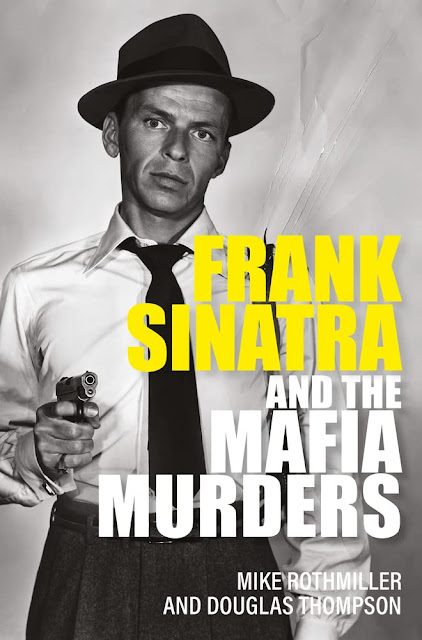
Frank Sinatra and the Mafia Murders - by Mike Rothmiller


Click on cover for Amazon link

Mike Rothmiller and Douglas Thompson draw on LAPD intelligence files, a cache of FBI documents, and extensive interviews with prime sources who worked with Frank Sinatra. Many of them tracked his long and fatal association with American Mafia leaders, including Sam 'Momo' Giancana, who shared a lover with President John F. Kennedy. 

Shortly after John F. Kennedy’s assassination, 19-year-old Frank Sinatra Jr. was kidnapped at gunpoint in Lake Tahoe, Nevada. A $240,000 ransom was demanded from his father. While law-enforcement agencies sprang into action, Frank secretly contacted his Mafia friends for help. The Mafia believed they could free young Frank much more quickly through their underworld connections. In the end, nine people died. 

Revealed here as never before is the extent to which Sinatra was adopted by the Mafia. They promoted his career and ‘watched his back.’ In return, Sinatra danced to their tune. The book reveals Mafia and CIA interests as well as explosive, previously secret documents. 

 Available for pre-release sales on Amazon, Barnes & Noble, and other outlets.


Mike Rothmiller is a New York Times Bestselling Author, nominee for the Pulitzer Prize, historian, former cop and Army medic. He's also served as a TV reporter, an award winning documentary producer and television host for ESPN, PBS and other international television markets. He's written and produced over 25 television documentaries, numerous TV and radio ads and has authored movie scripts. His nonfiction book, My Hero. Military Kids Write About Their Moms and Dads (St. Martin's Press) received international acclaim and holds the honor of being the only book in history to have forwards written by three living Presidents and General Norman Schwarzkopf. He's authored many books and his Secrets, Lies and Deception and Other Amazing Pieces of History was featured on Fox News and over 40 Television News Stations across America. Readers of his books include three Presidents, former First Lady Laura Bush, the late Charlton Heston and Queen Elizabeth II. 

Monday, December 12, 2022

Books as holiday gifts, by Vijaya Schartz


Vijaya's latest release.
 Find it HERE

Whether it’s a stocking stuffer novel, a kindle gift sent to a friend faraway, or the wrapped gift of a complete paperback series, if you know the favorite genre of the avid readers among your family and friends, books make wonderful gifts.

Maybe it’s the story they talked about but never got to buy for themselves. Maybe it’s the new release in a series they started and loved. Or you can surprise them with a book you enjoyed and want to share with them. In any case, it’s becoming simpler and easier than ever to gift books.

You can do it from your laptop or phone, order online from your favorite retailer, and have it shipped or emailed. It takes little time and effort. It will be appreciated on cold, snowy, or rainy days.

Going with a reliable publisher, like BWL Publishing, will ensure it’s a quality book. Other ways to select a good book is considering the author’s track record. Award-winning authors usually deliver consistent quality reads. You can also read the ratings and reviews shared by other readers on the retail sites.

The most difficult part of this process is selecting the right genre and the right titles. Find out if you friend likes cozy mysteries, romance, action/adventure, Historical novels, fantasy, science fiction, or a mix of genres.

I write in many genres and also like to mix them. From contemporary romance to realistic Celtic legends, to space opera and science fiction, including even felines in some of my stories. But each author brings his or her personal touch to the writing, and if you like an author in one genre, chances are you will like that author’s other writings as well.

Here are some suggestions from my popular writings:

Curse of the Lost Isle series (Celtic legends – Edgy medieval)
amazon - B&N - Smashwords - Kobo


Chronicles of Kassouk series (Sci-fi romance)
amazon - B&N - Smashwords - Kobo


Azura Chronicles series (Set on another planet – includes cats - androids - romantic elements)
amazon - B&N - Smashwords - Kobo


Byzantium series (Set on a space station - cats – action - sweet romance for all ages)
amazon - B&N - Smashwords - Kobo


Archangel twin books (Aliens and angels in a contemporary setting)
amazon - B&N - Smashwords - Kobo


Romance (rated R)
amazon - B&N - Smashwords - Kobo


Happy Holidays with books!


Vijaya Schartz, award-winning author
Strong Heroines, Brave Heroes, cats
http://www.vijayaschartz.com
amazon - B&N - Smashwords - Kobo - FB 


Monday, December 5, 2022

Back to Basics by Ashley E. Sweeney

CHARACTER AND PLOT DEVELOPMENT

CHARACTER DEVELOPMENT


Who is your most memorable character in literature? Jay Gatsby? Scarlett O’Hara? Sherlock Holmes? Gandalf? What is it about that particular character that has stayed with you over the years?


Scout Finch tops my list, the indomitable young girl in Harper Lee’s 1960 classic, To Kill a Mockingbird. Scout’s naiveté, coupled with her tomboyishness and blunt honesty, creates a flawed yet fully fleshed character who’s stayed with me since I first read the novel in the early 1970s. Even when I taught a unit on TKAM every year in high school English, I never tired of Scout or her earnestness. If anything, her character grew on me.

So how do we, as authors, create memorable characters in our own works? Knowing our characters inside and out, sometimes before they hit the page, is one of our most important tasks as authors. 

Think of it like dating. You don’t marry someone you hardly know (well, not usually!) It can take weeks or months (or in my case, years) to decide if that certain someone is right for us. We assess, observe, and question our potential mate’s inner and outer characteristics as we experience shared events and situations. 

Does he/she/they have road rage? Negative political views? A nasty habit? Does he/she/they have a penchant to do good in the world? Accept others, warts and all? Love wildly? All of this factors into our decision whether to take a chance on a relationship.

The same goes for characters. Who are they? And why should readers spend time with them?

Early on in every manuscript, my (very detail-oriented) editor asks for a five-pronged character map for each of my characters. Talk about time consuming! When I’d rather be writing! But it’s proved an invaluable tool for each novel.

Here is a sample:


Character Worksheet 

Be as specific as possible 

Vital Statistics - Physical Traits - Socio/Economic Situation -  Gut Reactions
Full Name: Height: Education: Certainty vs. Change: Gender: Weight: Occupation(s):
Confusion vs. Understanding: Age: Ethnicity/Race: Income:
Defeat vs. Success: Born: Hair:
Attitude toward wealth/ poverty: Despair vs. Joy:
Now Resides: Eyes:
Jealousy vs. Acceptance: Birth Order:
Striking Features: Personality Loss vs. Gain:
Parents: Physical Flaws: Introvert/Extrovert/Other:
Love vs. Hate: Siblings: Habits: Mental Illness (if any):
Panic vs. Calm: Spouse (if any): Health: Strengths:
Worthiness vs. Unworthiness: Children (if any):
Skills: Weaknesses: Pertinent Backstory: Hobbies:
Triggers: Disabilities: Spiritual Life (if any): Speech 

After this exercise, take the five category headlines (Vital Statistics, Physical Traits, Socio-Economic Situation, Personality, Gut Reactions), winnow it down, and write a character synopsis. I repeat this exercise for every major character in the book, first the worksheet and then the paragraph.

Note that these are more detailed for primary characters than secondary characters. Tertiary characters and cameo characters are not as fleshed out (or at all).

Here’s an example of a character synopsis of the protagonist, Ruby Fortune, in my recent release, Hardland.

Ruby Fortune: protagonist; VS: Ruby Barstow Fortune, b. 1873 in Tucson, Arizona (6 years old (1879) to 34 years old (1907) in span of novel), only child of now-deceased George “Big Burl” Burlingame Barstow, widowed, mother of five boys (one deceased), resides in Jericho, A.T. north of Tucson, kills husband, Willie Fortune, in self-defense, swindles co-mine owners for claim of Silver Tip Mine outside Jericho, A.T. 

PT: Short, blonde, thin, flat-chested, weathered face, fit, attractive, low voice

S-E: Eighth-grade education, "Girl Wonder" (sharpshooter in her father’s Triple B Traveling Carnival and Wild West Show), now owner/proprietor of Jericho Inn/The Miracle.

P: Extrovert, outspoken, hard worker. Character Strengths: willful, loyal. Character Weaknesses: details, men. Triggered by nightmares of past abuse. Admits mistakes. In awe of nature.

GR: Difficulty working through change. If taken once by someone, vows not to be taken again (exception: Willie Fortune). Accepts everyone at face value, although not without judgment; slow to alter first impression, but does, when warranted (for good or evil). She-bear about sons; puts them first at her own expense. Struggles with relationship to God. At times, hot-tempered and foul-mouthed; at other times, reflective and soulful. Often own worst enemy. Makes mistakes in relationships. Works to manage pain and panic. Questions whether she is worthy. 

You’d be surprised how many times I returned to this synopsis while writing. When Ruby is hot-tempered, her mouth runs ahead of her thoughts. Check. I’m being consistent. When she’s reflective, she goes somewhere deep, into a place reserved for interior dialogue. Check, again. Consistency to character is paramount.

If it sounds like a lot of work to create characters through devices such as worksheets and synopses, it is. I contend you’ll be more satisfied with your characters, though, and so will your editors and readers.

But wait, there’s more!

PLOT DEVELOPMENT

After getting to know my characters, my editor then assigns a chap-by-chap plot summary worksheet, using the following classic plot template:

DATE/SETTING

Opening: Falling Action: Inciting Incident: Denouement: Rising Action: Ending: Climax

My entry for the first chapter of Hardland begins this way:

September 7, 1899, Jericho, Arizona Territory

Opening:

Weather detailed: windy/cloudy/dark
Locale detailed: dry/unforgiving/spare
Character detailed: stature/anxiety/bruised neck from recent abuse

Inciting Incident:

Ruby Fortune navigates steep, dangerous incline to Silver Tip Mine outside Jericho, A.T., almost falling into a crevice

Rising Action: 

Ruby Fortune arrives at Silver Tip Mine with forged will of dead husband Willie Fortune to claim ¼ of mine ownership; plans to buy a dilapidated roadhouse with funds 

Climax:

Ruby confronts and pulls gun on mine owner, Jimmy Bugg

Falling Action: 

Sheriff Sheldon Sloane arrives at mine on business

Denouement:

Sloane arranges for Bugg to pay Ruby the next day at Jericho First National Bank

Ending:

Ruby and Sloane ride back to Jericho in middle of monsoon

As a classic “pantser,” this worksheet is not nearly as detailed as outlines of classic “plotters,” but it does give structure to each chapter. And remember to end each chapter, as novelist Olivia Hawker says, with a “cymbal crash” (others call it a “cliff-hanger” or an “uh-oh” moment, something to keep your readers going and not wanting to put your book down).

In closing, there is much we can do before we even start our stories to flesh out characters and give our stories shape. Of course, authors must be flexible as writing is underway. Maybe a character develops an unforeseen ailment to deepen the plot, or we have to switch up or delete chapters for clarity. Life—in reality and in fiction—is full of surprises. Be open to them!

Until next time, Happy Writing!


Ashley E. Sweeney is the winner of the 2017 Nancy Pearl Book Award for her debut novel, Eliza Waite. A native New Yorker, she is a graduate of Wheaton College in Norton, Massachusetts, and resides in Tucson. Answer Creek, released in May 2020, is her second novel. Her third novel, Hardland, is set in the Arizona territory at the beginning of the 20th century. It was released on September 13, 2022. Find out more about Ashley at: ashleysweeneyauthor.com 


Wednesday, November 30, 2022

New book release: Marky the MAGNIFICENT Fairy - by Cynthia Kern OBrien

Find this book in pre-order on Amazon HERE (2023 release)


 Believing in yourself isn’t always easy. Marky learns that firsthand when the other woodland fairies make fun of her. They laugh at her one small wing and say mean things about her fiery-red hair, her glasses and her freckles. It is hurtful, but through Marky’s determination, she helps them understand that everyone has exceptional qualities. Some are visible. Some are invisible. Through her kindness, Marky teaches her friends about self-love, confidence, acceptance, positivity and compassion. She reminds them they are magnificent. Readers of all ages learn to believe in themselves and the importance of treating everyone with respect and kindness.

About the author:

Cynthia Kern OBrien is the author of the A True Story by Granny debut picture book series: I Used to be a Fairy; The Tooth Fairy and the Baby Elf; and I Don't Want to Go to Preschool, the Fairy Queen Calls. A grandmother of three, she resides in California with her husband and Yorkshire mix, Pickles. OBrien finds inspiration for her writing in her grandchildren and their worldview, aspiring to teach young readers caring and kindness for people and animals of all stripes. Early on, her book series became a Readers Favorite and multi-award-winning recipient.

Thursday, November 24, 2022

New book release: GRACIE a rescue dog - by Marlene Baird

Find this book on Amazon HERE


 Marlene Baird is the author of four published novels: Murder Times Two, The Filigree Cross (The Salvation of Larry Broadfellow), Minnie and the Manatees, and Claire Walker, which are available at Authorhouse.com She took third place in the Lorian Hemingway International Short Story Contest, and has won several other awards. She is a member of Professional Writers of Prescott and Arizona Authors Association. On two occasions she has taken first place in the Arizona Authors Association's annual writing contest and serves as a judge for the contest. Marlene is a transplanted Canadian living in Prescott, AZ with her husband, Bob, and Gracie.


Gracie, on the other hand, belongs to no organizations. She is adept at eating, sleeping, hiding, walking and being petted. She can lift spirits and make a person laugh. She loves other dogs, snacks, and playing. She is a smart dog who has taught her people all of her tricks. Her ancestry is unknown.


Gracie was adopted December 15, 2020 from Yavapai County Humane Society in Prescott, Arizona. This is the story of how she became so important to the family that adopted her. The purpose of the book is to promote adoption of helpless animals and to thank all of those individuals who do this necessary work.

Monday, November 21, 2022

New book release: To Travel Well, Travel Light - by Mary Coday Edwards

Find this book on Amazon HERE


As a young mother, Mary moves from the US to Peshawar, Pakistan, with her family to help her Afghan friends rebuild their country, only to painfully watch her patriarchal Christian worldview tumble down and be rebuilt with soul-driven goals and values.


To Travel Well, Travel Light is a two-part memoir of an outward journey and an inward journey. Part 1 tells the story of the joys and pitfalls of living and working abroad with children in tow. A USAID program brought educated young Afghan men to the Midwest to instruct them in public administration. Mary and Mike befriended them through a community friendship program, and these mujahideen persuaded this adventurous family to move to Peshawar.

They lived in Pakistan instead of Afghanistan because of security concerns. But with Peshawar’s ultra-conservative honor code of Pushtanwali, men threw rocks at Mary because of her exposed blonde hair, and she traveled through Pakistan’s tribal territory veiled and disguised as a good Muslim woman.

She worked for an Afghan NGO in post-conflict reconstruction projects inside Afghanistan, and Mike administered the Afghan Eye Hospital in Peshawar. Their older son finished high school in Peshawar through a university distance-learning program and, in the process, learned to hang glide, grew fluent in the Pashtu language, and met young people from all over the world. Their younger son attended pre-school with children from around the globe and picked up language peculiarities, such as calling an eraser a "rubber".

In Part 2, Mary narrates the crumbling of a worldview that no longer served her and the creation of its replacement.

This section opens in Indonesia where the family moved after living eight years in Pakistan. Mary worked as an editor for Indonesia's newspaper The Jakarta Post, and Mary toured and wrote about a rehabilitation and release sanctuary for majestic hawks and eagles located on one of the nation’s 17,000 islands. Rescue personnel ensured that these birds of prey did not become dependent upon humans and thus unable to survive in the jungles upon their release.

Mary compares the dangers of domestication of wild birds with Clarissa Pinkola Estés’ interpretation of the Red Shoes Fairy Tale. Dr. Estés explains how a woman can be metaphorically captured through coerced cultural conformity, overly domesticated as she tries to fit in, and then when she is free, goes feral. When feral, she is vulnerable to various wounding traps.

Mary uses Dr. Estés’ tale as a metaphor for her own life. In Chapters 19 to 23, she recounts how she was “captured” as a child. When set free in her late teens, she made unhealthy choices before joining the Jesus Movement, which morphed into the trap of patriarchal Christianity—a system of belief that denied adult women their agency and kept them as children.

She knew she had to flee that enforced childhood. Just as the hawk and the eagle needed a safe space to recover, Mary narrates in Chapters 24 to 30 how she found her safe space during her global travels in Pakistan, Tanzania, Kenya, and Indonesia. She dug out the buried parts of herself that had gone underground and, with that as her foundation, created a life-affirming worldview. Her initial guides were psychiatrist Carl Jung and the sixteenth-century monastic John of the Cross, both of whom affirmed her inner knowing.

A wise South African professor led her to more guides: physicists-turned-theologians Ian Barbour and John Polkinghorne and their research and comparison of religion and science. Through them she gained new ways of considering the natural and spiritual realities. These tools included critical realism; the use of metaphors, models, and paradigms in science and religion; and the philosophical implications of quantum mechanics.

This family traveled and worked around the world for almost 20 years before settling back in the States in 2011.

About the author:

Of the twenty years Mary Coday Edwards lived and worked abroad with her family, eight were in Pakistan, where she worked in Afghan refugee post-conflict repatriation and reconstruction projects. She is an internationally published author and worked as an editor for English daily newspapers in Jakarta and Mexico. With her BS in engineering, an MA in energy and environmental studies, and post-grad studies in ecological justice, abroad she worked and wrote on environmental sustainability issues at both global and local levels emphasizing the physical interconnectedness of all things.After living in Asia, Southeast Asia, East Africa, and Latin America, upon returning to the US she became a nonsectarian ordained minister through Denver's People House, where she has been a regular blogger for more than six years.