Monday, October 31, 2022

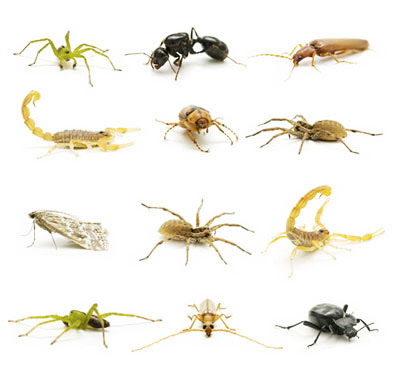
Happy Halloween - Enjoy the bugs, too - by Vijaya Schartz

 Halloween decorations are up everywhere. Spooky skeletons and shadowy graves, giant spiders, ghosts, and scary sounds punctuate the season. And new book releases on the same theme accentuate the mood.


Around Phoenix, Arizona, it’s also the season when night temperatures finally drop, prompting us to open doors and windows. Of course, the bugs take it as an invitation to get indoors to shelter from the cold… and here, the buggers are big, and some can kill you, like scorpions, centipedes, killer bees, black widows. There are also roaches, brown spiders, moths, horse flies, wood bees, fire ants, and West-Nile- diseased mosquitoes.

I refuse to spray harmful chemicals around my place, so I adopted a direct approach, the smash technique. I’m good at it, and I kill nine times out of ten. No quarters. They invade my home, they want to kill me or suck my blood, they have to die. If I don’t have a fly swatter handy, my bare hand or a shoe will do, depending on toxicity. This favorite technique also keeps my reflexes sharp.


Fortunately, in my constant hunt for bugs, I have some help. Princess Jasmine, my sixteen-year-old calico cat, is also a great hunter of bugs… and lizards… and other critters. Did you know cats are immune to scorpions? They are.

Unlike me, Princess Jasmine usually eats her fresh kill, chewing it with gusto… even if it’s still wiggling. Personally, I prefer to drop the cadavers in the trash… or flush them down the toilet. But, to each his own…

There are none of these bugs in my latest science fiction novel, as space is not a welcoming environment for them. But ANGEL SHIP, Book One of the Blue Phantom series, features a strong heroine, a brave hero, twisted villains, lots of action and adventure, a little romance, and a large feline bodyguard with deadly fangs and claws. Hope you enjoy it.


 The Blue Phantom glows like a beacon in black space, appears and vanishes, and never registers on scanners. Rumors say it will save the righteous, the oppressed, and the downtrodden… and slay the unworthy without mercy. The space pirates fear it. Their victims pray for it… but its help comes at a price…

Desperate to save her people from the Marauders swarming her space freighter, Kefira prays for a miracle. Blake Volkov, legendary captain of the Blue Phantom hears her plea and deems her and her refugees worthy of his help. Grateful for the rescue, Kefira finds his price shocking. But despite his glowing wings, handsome looks and impressive abilities, Blake admits he is no angel… although Kefira’s feline bodyguard strongly disagrees.

Meanwhile, an old enemy bent on revenge unleashed an unspeakable evil on the galaxy. Time to face past mistakes… time for innocent blood to flow. Nothing prepared Kefira for the upheaval ahead.

Can Blake find redemption? Can Kefira save her people? Can she ever trust and love again?


Find more similar novels set in the Azura universe at:


Vijaya Schartz, author
Strong Heroines, Brave Heroes, cats


Saturday, October 29, 2022

New book release: HARDLAND - by Ashley E. Sweeney

Find this book on Amazon HERE


 Arizona Territory, 1899. Ruby Fortune faces an untenable choice: murder her abusive husband or continue to live with bruises that never heal. One bullet is all it takes. Once known as “Girl Wonder” on the Wild West circuit, Ruby is now a single mother of four boys in her hometown of Jericho, an end-of-the-world mining town north of Tucson. Here, Ruby opens a roadside inn to make ends meet. Drifters, grifters, con men, and prostitutes plow through the hotel’s doors, and their escapades pepper the local newspaper like buckshot. An affair with an African American miner puts Ruby’s life and livelihood at risk, but she can’t let him go. Not until a trio of disparate characters—her dead husband’s sister, a vindictive shopkeeper, and the local mine owner she once swindled—threaten to ruin her does Ruby face the consequences of her choices; but as usual, she does what she needs to in order to provide for herself and her sons. 

 
Set against the breathtaking beauty of Arizona’s Sonoran Desert and bursting with Wild West imagery, history, suspense, and adventure, Hardland serves up a tough, fast-talking, shoot-from-the-hip heroine who goes to every length to survive and carve out a life for herself and her sons in one of the harshest places in the American West.


About the author:


Ashley E. Sweeney is the 2017 winner of the Nancy Pearl Book Award for her debut novel, Eliza Waite, set on a remote island in Washington State and in Skagway, Alaska, during the Klondike Gold Rush in 1898. Sweeney's second novel, Answer Creek, “a gripping tale of adventure and survival based on the true story of the ill-fated Donner Party on their 2,200-mile trek on the Oregon–California Trail from 1846 to ’47,” won the 2021 Gold IPPY Award for best regional fiction as well as first place in the Fiction category in the 2020 Arizona Authors Association Literary Contest, 2021 winner of the New Mexico-Arizona Book Award and winner of the 2021 Next Generation Indies Award.

Monday, October 24, 2022

Understanding plagiarism - by Kathleen Cook

 Few Writers Understand Plagiarism

I was reminded this week about how little writers understand plagiarism, what it is, who does it, and how serious it is. Do nice people plagiarize? Sure! Some of the best and most honest people in the world plagiarize, because they “think” they know what it means and they would never do what they “think” it is.

So, What IS Plagiarism?

Most people believe that plagiarism is someone passing off another’s entire work as their own, or taking large passages from a copyrighted book without acknowledgment. Nope. Well, okay, that IS plagiarism, but plagiarism is so much more than that. There are actually four types of plagiarism, as defined on the Bowdoin College website: 

Direct Plagiarism

“Direct Plagiarism” is a precise transcription of any part of another’s work, whether published or not, with no quote marks and no attribution. The new transcription appears to be the work of the plagiarist, rather than the one who originally authored the work. “Direct Plagiarism” could occur with as little as one unique phrase or passage, such as the example Bowdoin College gives: 

Plagiarist: Long ago, when there was no written history, these islands were the home of millions of happy birds; the resort of a hundred times more millions of fishes, sea lions, and other creatures. Here lived innumerable creatures predestined from the creation of the world to lay up a store of wealth for the British farmer, and a store of quite another sort for an immaculate Republican government. 

Original Source: "In ages which have no record these islands were the home of millions of happy birds, the resort of a hundred times more millions of fishes, of sea lions, and other creatures whose names are not so common; the marine residence, in fact, of innumerable creatures predestined from the creation of the world to lay up a store of wealth for the British farmer, and a store of quite another sort for an immaculate Republican government." 

Self-Plagiarism

“Self-Plagiarism” is plagiarizing your own previous work without telling the reader that you published it previously (and where). If you submitted it for an assignment, for example, and later wanted to use parts of your own work for another assignment, you would need your former as well as your current teachers’ permissions. If you didn’t get it, you could be subject to penalties for violating self-plagiarism policies. Even if such work is not done in an academic setting, it’s a good idea to let your readers know that whatever they’re reading is a reprint. You may even get more exposure by being honest with your readers, when they click on your links to the original work! 

Mosaic Plagiarism

When a person takes a passage from another author and then looks for synonyms for the key words in that passage, in order to change it just a little bit to avoid plagiarism … guess what, folks. That’s plagiarism! It’s also known as “patch writing” because you patch the original sentence with a few synonyms to make it sound like different work. According to Bowdoin College, “...this kind of paraphrasing, whether intentional or not, is academically dishonest and punishable.”

Here’s an example of Mosaic Plagiarism from Bowdoin College:

Plagiarist: Only two years later, all these friendly Sioux were suddenly plunged into new conditions, including starvation, martial law on all their reservations, and constant urging by their friends and relations to join in warfare against the treacherous government that had kept faith with neither friend nor foe.

Original Source: "Contrast the condition into which all these friendly Indians are suddenly plunged now, with their condition only two years previous: martial law now in force on all their reservations; themselves in danger of starvation, and constantly exposed to the influence of emissaries from their friends and relations, urging them to join in fighting this treacherous government that had kept faith with nobody--neither with friend nor with foe."

Accidental Plagiarism 

According to Bowdoin college, “Accidental Plagiarism occurs when a person neglects to cite their sources, or misquotes their sources, or unintentionally paraphrases a source by using similar words, groups of words, and/or sentence structure without attribution.” They go on to say, “Cases of accidental plagiarism are taken as seriously as any other plagiarism and are subject to the same range of consequences as other types of plagiarism.” 

While Bowdoin College’s rules may seem harsh to some authors, they are in place to protect authors from losing the control and benefits of their own work.

Is Plagiarism Illegal?

Most people think it is, but nope … it isn’t! It may be unethical and dishonest, but it is NOT illegal! So, does that mean you have nothing to worry about if you plagiarize? Nope … not by a long shot. While plagiarism may be perfectly legal, copyright infringement, which is related but distinctly different, is most definitely illegal. What’s the difference? If a work falls under the rules of copyright, then you may get into legal trouble if you plagiarize any part of that work. If the work is in the “public domain,” such as Cervantes’ Don Quixote, then you may plagiarize to your heart’s content without fearing a lawsuit. I’m not advising this, because it’s STILL unethical, dishonest, and your reputation may suffer, but it isn’t illegal.

The trouble with taking things off the internet, however, is that most written works, including Wikipedia articles, are copyrighted. You may not be able to tell, but if you use something, you could face serious copyright infringement lawsuits, which can result in the loss of many thousands or even millions of dollars. In my career as an editor, I once dropped a client for a small amount of plagiarism that he refused to properly cite. He laughed and said I was being too “prissy” and that everyone copies a line or two. He wasn’t laughing six months later when he called and said, “You won’t believe it, but I’ve just been sued for plagiarism on my first best seller! I should have listened to you!” Yes, I did believe it, although technically, he was sued for copyright infringement, not plagiarism, for something he lifted off the internet. Before it was over, the incident cost him $12,000, and that was getting off cheaply compared to other cases. 

So Why Does “Everyone” Do It?

It sure seems like “everyone” plagiarizes, doesn’t it? Everyone is taking things off the internet and reposting them. Everyone is lifting a few sentences to put on their blogs or in their articles, right? Wrong … not everyone. There is one tiny group of authors who never plagiarize anything. Who are they? Do they even matter if their numbers are so tiny? Yes, they do, because they’re the ones at the top of the heap … the ones who are making millions on their work. Most of us will never hit their heights, but nearly all of us hope that we will, someday. You know why they don’t plagiarize? Because they know they are targets for lawsuits. They know that people will scrutinize their works looking for ways to make some $$. Successful authors do not, as a rule, plagiarize even one sentence. They don’t want to be bogged down in endless hassles, endless hearings, and endless settlements that cost them time and money.

Aunt Sally or other small-potatoes writers have little to worry about, because they don’t have anything worth the bother of suing. But does Aunt Sally or that small-potatoes writer really want to stay small forever? And how can they know what article or book of theirs will somehow go viral and turn into an overnight sensation, as happened with my former client? Don’t we all dream of that? The dream can easily turn into a nightmare if we have to worry about what our work contains. And it isn’t just the book that goes viral that plagiarism hunters will scrutinize. If even ONE of your books goes viral, plag-hunters will check EVERY SINGLE WORK YOU’VE EVER WRITTEN. With just that one success, you’ve become “lawsuit bait” and must worry about everything you write in future OR have ever written in the past!

Authors who sell few copies for the rest of their lives will probably never have to worry about coming under the scrutiny of lawyers or other writers. But most authors do not want to sabotage their careers or their futures by doing something that can kill their chances of hitting the stars. They want to be known, to have their works praised … and let’s face it … most of us would love to make a living on our writing and never sweat a 9-5 job again.

In order to get big, you have to think big. And thinking big means avoiding anything that will kill your future stardom. It’s not just the lawsuits you have to worry about, it’s what the lawsuits generate: a loss of income, loss of reputation, loss of prestige, and loss of future ability to write, if Amazon, Barnes and Noble, and other stores drop your account and refuse to sell your books. All of these things should be important to you now, while you’re still dreaming of that New York Times bestseller. So don’t plagiarize … not one sentence, not one phrase. Check the examples by Bowdoin College and arm yourself for your future success and fame.

May all your writing dreams come true!


Kathleen Cook is a retired editor and the author of more than twenty books. A former copy writer/editor for Demand Studios, she also served as the Fictional Religion Editor for the ODP (Open Directory Project) in the late 90s. She is currently the Arizona Authors Association Editor as well as its website administrator. 

Wednesday, October 19, 2022

New book release: PANGEA - by Peter Dechristopher

Find this book on Amazon HERE


In the Sombrero Galaxy, created thirteen billion years ago, a single planet in one of its solar systems was granted by the Ancient of Days, the creator of time and space, to set forth the seeds of life. After billions of seasons of tectonic movement, its many continents converged to form a single supercontinent thusly named by ancient Tehran kings - Pangea. An evil entity once encountered in the Second Age of their civilization appears to be stirring once again in the Dark Forest. Led by the Tehran sorceress, Isolde; a Centaur lord; Warrow elves; and a Wiki. They will lead a perilous journey, along with the armies of the five kingdoms, toward the citadel of the Dark Tower to encounter the evil lord, Abaddon. With his minions of cyclops known as the Malakai and the dwarf Neanderthals, they will do battle for control of Pangea. 


About the author:

Born on Long Island, New York, Peter started writing both music and lyrics at an early age while learning to play the guitar, which blossomed into a career writing blogs and articles for financial publications. He owned a Financial Planning Practice for many years. After moving from New York to Arizona in the early 2000s he attended Pima College and took many creative writing courses, which aroused his interest in writing stories. His interest in writing was concentrated in two basic areas, science fiction and horror. Now with multiple books in the works, he has introduced to the reading public new heroes and villains in Pangea. 
Website: http://www.peterdecristopher.com 


Saturday, October 15, 2022

New Release: UNDER A VEILED MOON by Karen Odden


Available from Amazon HERE

In the tradition of C. S. Harris and Anne Perry, a fatal disaster on the Thames and a roiling political conflict set the stage for Karen Odden’s second Inspector Corravan historical mystery.


September 1878. One night, as the pleasure boat the Princess Alice makes her daily trip up the Thames, she collides with the Bywell Castle, a huge iron-hulled collier. The Princess Alice shears apart, throwing all 600 passengers into the river; only 130 survive. It is the worst maritime disaster London has ever seen, and early clues point to sabotage by the Irish Republican Brotherhood, who believe violence is the path to restoring Irish Home Rule. 
 
For Scotland Yard Inspector Michael Corravan, born in Ireland and adopted by the Irish Doyle family, the case presents a challenge. Accused by the Home Office of willfully disregarding the obvious conclusion and berated by his Irish friends for bowing to prejudice, Corravan doggedly pursues the truth, knowing that if the Princess Alice disaster is pinned on the IRB, hopes for Home Rule could be dashed forever.

Corrovan’s dilemma is compounded by Colin, the youngest Doyle, who has joined James McCabe’s Irish gang. As violence in Whitechapel rises, Corravan strikes a deal with McCabe to get Colin out of harm’s way. But unbeknownst to Corravan, Colin bears longstanding resentments against his adopted brother and scorns his help.
 
As the newspapers link the IRB to further accidents, London threatens to devolve into terror and chaos. With the help of his young colleague, the loyal Mr. Stiles, and his friend Belinda Gale, Corravan uncovers the harrowing truth—one that will shake his faith in his countrymen, the law, and himself.

Karen Odden earned her Ph.D. in English from New York University and subsequently taught literature at the University of Wisconsin-Milwaukee. She has contributed essays to numerous books and journals, written introductions for Victorian novels in the Barnes & Noble classics series and edited for the journal Victorian Literature and Culture (Cambridge UP). Her previous novels, also set in 1870s London, have won awards for historical fiction and mystery. A member of Mystery Writers of America and Sisters in Crime and the recipient of a grant from the Arizona Commission on the Arts, Karen lives in Arizona with her family and her rescue beagle Rosy.

Monday, October 10, 2022

He Said, She Said - by Ashley E. Sweeney


This month, we’ll turn our attention to dialogue in our manuscripts. I’ve spent the better part of the last 15 years learning to craft more efficient and snappy dialogue. Before turning to writing novels full time, I spent a dozen years as a journalist. Following the familiar 5-W concept (who, what, where, when, and why), all of my articles relied on direct quotes from sources. Never did I misquote or embellish; whatever the source said—unless edited for clarity—wasn’t tampered with. Ever. 

When I began my full-time writing career (writing a novel can’t be that hard, can it?!), I had little trouble with plot, characterization, or description. Where I found myself lacking: dialogue. To remedy that, in addition to buying numerous books on the subject, I took a one-week intensive course with American playwright and screenwriter Theresa Rebeck (Smash, NYPD Blue) at Hedgebrook on Whidbey Island, Washington. There I came to learn how dialogue is critical to story. 

The first rule learned: Always tag dialogue with only “John said” or “he said”/“Jane said” or “she said” (the only time to break this rule is when a character asks a question; in that case use “he asked” or “she asked.”)

What, you say? None of “he whispered” or “she shrieked” or “he cried” or “she demanded?” And how to do this without pulling our hair 

 This is where your scene set-up and character description is paramount. If you’re setting up a passage where Jane might shriek, it’s all in the build up, i.e. a door opens, someone comes up from behind and accosts the character, the character bristles and screams. In this case, you might write “Get your hands off of me!” or “What the . . . ?!” An exclamation point alone will convey surprise or fright if the scene is set with tension.

If you’re intent on Jane demanding something, again, scene set up and description, i.e. Jane bursts into the office, slams her fist on the table, the room goes quiet. “Hand them over,” she said. “Now.”

We all know the old adage: Show, don’t tell. With this in mind, it’s important not to modify dialogue tags with adverbs, i.e. “she said resentfully.” Again, show, don’t tell that Jane resents John. You can use internal dialogue or backstory. It’s also unnecessary to use character’s names every time they speak.

See how unnatural this sounds:

“What do you want, Jane?” John said.

“I want the divorce papers,” Jane said. 

“Jane, you know I won’t hand them over without a fight,” John said.

“John, you exasperate me,” Jane said. “Hand them over. Now.”

Try this instead:

Jane bursts into the room, her face pock-marked with red blotches. Damn it that she forgot her concealer. A quick trip to the office ladies' room wasn’t worth the effort; she looks like shit. 

John looks up from his desk, his glasses perched low on his nose. She can feel his hostility across the room. “What do you want?” He looks down then, as if she’s not worth his attention. 

“The divorce papers."

He looks up, eyes narrowed, a sneer searing his lip. “You know I won’t hand them over without a fight. Not to you.”

Bastard. All those years living with bruises. He won’t beat me here. She advances toward the desk, knotting her hands to keep them from shaking. I can do this.

“Hand them over. Now.”

* * *

Now let’s dig deeper to uncover best practices for writing good dialogue. 

The first book I bought on the subject was titled eponymously, Dialogue, an imprint from the “Write Great Fiction” series by Gloria Kempton (Writer’s Digest Books, 2004). 

Here are 10 nuggets I underlined from Kempton’s book with comments of my own in parentheses:

1. We must slip inside our characters and become them; from inside of our characters, we begin speaking (be sure to do a complete character map before putting words in their mouths).

2. Dialogue reveals the character’s motives and opposing agendas (both external and internal dialogue accomplish this).

3. Effective dialogue always delivers tension (i.e. leave out the boring parts!)

4. Dialogue moves the plot forward (always). 

5. Dialogue gives the scene a three-dimensional feel (think all the senses: sight, sound, smell, taste, touch). 

6. Use contractions in dialogue to make the conversation feel and seem natural (you’ll notice the difference when you get to tip #10). 

7. Write dialogue that is eavesdropping-worthy (now we’re getting to the good stuff!) 

8. Pace your dialogue by inserting character movement (sometimes this will result in sentence fragments or sentences left hanging 1) with ellipses after train of thought, i.e. “I thought you said . . .” Jane looks at her feet. Can I really say this aloud? She dusts dried dirt off her foot and wipes her hand on her jeans. “Like I was saying . . .” OR 2) an em-dash if character is interrupted mid-sentence, i.e. “You said you meant—” “I did.”)

9. Clearly show character emotion in dialogue (your characters aren’t robots, or even if they are, you’ve no doubt infused them with human emotion).

Other good resources on my bookshelf: The Fiction Writer’s Guide to Dialogue, by John Hough, Jr. The Writer’s Guide to Realistic Dialogue, by S.A. Soule Writing Dialogue, by Tom Chiarella

Many other resources are available online; simply do a search for “craft of dialogue” and you will find a plethora of choices. And be sure to check out the recent AAA webinar by Penny Orloff titled, Let Them Talk! Writing Compelling Character Dialogue. Find a link to the webinar on the Arizona Authors website.

One parting thought. I like to visualize all of my scenes, as if I’m seeing them cinematographically. Everything in the scene should transfer from the page to the reader’s mind as if they are seeing it. Great dialogue is key to this. 

As I say every month, “take or toss” any tips found in this column or in other resources. It’s your manuscript and you get to set the rules. Until then, Happy Writing!

Ashley E. Sweeney


Ashley E. Sweeney is the winner of the 2017 Nancy Pearl Book Award for her debut novel, Eliza Waite. A native New Yorker, she is a graduate of Wheaton College in Norton, Massachusetts, and resides in Tucson. Answer Creek, released in May 2020, is her second novel. Her third novel, Hardland, is set in the Arizona territory at the beginning of the 20th century. It was released on September 13, 2022. Find out more about Ashley HERE.
 

Monday, October 3, 2022

New release: ANGEL SHIP, Book One of the Blue Phantom series - by Vijaya Schartz


 ANGEL SHIP, Book One of the Blue Phantom series
is an October 2022 release from BWL Publishing
amazon B&N - Smashwords - Kobo

There is a phantom ship that glows like a beacon in black space, appears and vanishes, and never registers on scanners. Rumors say it will save the righteous, the oppressed, and the downtrodden… and slay the unworthy without mercy. The space pirates fear it. Their victims pray for it... but its help comes at a price...

Desperate to save her people from the Marauders swarming her space freighter, Kefira prays for a miracle. Blake Volkov, legendary captain of the Blue Phantom hears her plea and deems her and her refugees worthy of his help. Grateful for the rescue, Kefira finds his price shocking.

Despite his glowing wings, handsome looks and impressive abilities, Blake admits he is no angel… although Kefira’s feline bodyguard strongly disagrees.

Meanwhile, an old enemy bent on revenge against Blake unleashed an unspeakable evil on the galaxy. Time to face past mistakes… time for innocent blood to flow. Nothing prepared Kefira for the upheaval ahead.

Can Blake find redemption? Can Kefira save her people? Can either of them ever trust again?

Cast of characters:

Kefira is a Sardar princess, the last descendent of a long line started by a goddess, to lead her people. Her name means “Young lioness” and she is loyal, fierce, and dedicated to take her people to the home of their ancestors, where they can live in peace and be safe. But travel is perilous. Since the collapse of the evil Galactic Trade Alliance, space pirates plunder, rape, kill, and trade slaves with impunity.

In this disorganized and lawless galaxy, Blake Volkov, captain of the Blue Phantom, is haunted by his past mistakes and doubts his self-worth. He vowed to redeem himself and erase the guilt of his shady past, by helping those worthy of rescue.

And, of course, there is a big cat named Karak, the heroine’s sturdy bodyguard. Their minds are linked, and his fangs and claws are deadly. He follows her in the boardroom and in battle. Karak’s devotion to his job and fierce protective instincts are only surpassed by his love for his human mom, who still calls him Kitten.

But in the shadows, a new evil power is rising to fill the void and take control of the galaxy. Matchitehew, Sorcerer Supreme of the Stygian Order, will stop at nothing to realize his ambitions, seeking revenge, ruling through fear, spilling rivers of blood, sacrificing the innocent…

amazon B&N - Smashwords - Kobo


If you like science fiction, fantasy, action and danger, strong heroines, brave heroes, powerful villains, cats, robots, cyborgs, angels, and a touch of romance, you may want to also check out the other series in the Azura Universe: Azura Chronicles, set on an angel planet, and Byzantium, set on a space station.

amazon B&N - Smashwords - Kobo


Happy Reading!


Vijaya Schartz, author
Strong Heroines, Brave Heroes, cats


Thursday, September 29, 2022

New release: Miriam’s Story: A Biographical Historical Novel - by Elizabeth Ajamie-Boyer


Find this book on Amazon HERE

In the late 1800s, Miriam Baalbeky emigrated from Baalbek, Lebanon. Only about thirteen years old, she was torn from everything she knew for a new life in the United States of America.

5-star review on Amazon:

This book is written beautifully. The author conveys just how Miriam (my great grandmother) must have felt leaving her home in Lebanon. And she nailed it with my Great Aunt Florence! I got a chuckle or two out of reading about her! I knew and loved these people until they passed, and Elizabeth brings out their personalities with panache. A great read for adults and young adults alike. I thank Elizabeth from my heart for writing this lovely biography. Miriam's hopes and dreams were fulfilled, and she did indeed create a family numbering as many as the sands of the seashore. So many memories.... With love, Gillian Salem

About the author:

From Phoenix, Arizona, Elizabeth graduated from East High School, South Mountain Community College, and Arizona State University. She writes her own books, and co-writes with her husband, TJ Boyer, primary author of The Mirror Gate Chronicles series. As a Christian, Elizabeth is called to write gentle romance and historical fiction. Elizabeth and TJ have two children and three grandchildren.

Find out more about Elizabeth HERE.


Monday, September 26, 2022

New Release: My Nana's Special Gift is... - by Tracy T. Agnelli


Written by Tracy T. Agnelli and illustrated by Claudie C. Bergeron, this children's picture book is about a bonding between Nana's and their grandchildren, and the special gifts they teach them.

Find it in print on Amazon HERE

Tracy grew up in Arizona, where he writes children’s books. Tracy has worked at an elementary school for over 25 years, where he enjoys reading to the children when he can. When not at work, or working on writing, he enjoys meditating, yoga, and being with family. Tracy has two children and one grandchild. He tries to get healthy but loves cookies. 

Thursday, September 15, 2022

Decluttering your life, your manuscript, your closet - by Vijaya Schartz

Find all my titles at: amazon B&N - Smashwords - Kobo


Minimalism is on the rise. In the aftermaths of the pandemic, we developed an appreciation for uncluttered living spaces. Besides, clutter is unhealthy, can cause depression… or harbor ghosts of your past. After decluttering, you will be healthier, happier, and free to move on with your life.

Eight years ago, I left a husband and his big house to live with my cat in a tiny apartment. Since then, I moved again, and each move is an opportunity to get rid of clutter. And despite the fact that I am a minimalist at heart, I still have to remind myself to declutter from time to time. Usually, it’s when I run out of hangers, or I can’t find the top I want to wear in the impossibly tight closet.


As our body changes, we buy new clothes but keep the old ones. Just in case? Why? Get rid of the clothes you no longer wear, like old bras that don’t fit anymore. If you ever lose the weight to fit in those skinny jeans again, they will be out of style and you’ll want to buy new ones anyway. Get rid of the shoes that hurt your feet, tired flannel shirts, cropped tops from another decade, work clothes from a previous job, etc.

As I’m turning in my October release to the publisher, ANGEL SHIP, Book One of a new sci-fi series with romantic elements titled Blue Phantom, I thought a few days of decluttering would keep me busy while waiting for the edits.

Here is the stunning cover of ANGEL SHIP
Find other books in the Azura universe: 
amazon B&N - Smashwords - Kobo


But this is easier said than done. I still have favorite shirts from two decades ago. I know I can never wear them in public, but I still love them. I don’t go out very often, and except for maybe four times a year, I only wear yoga pants, sports bras, and loose tops while typing away at my computer or going to my Tai-Chi classes.


To make it easier on your soul, start with a smaller space, like your car. Then you can move to the trash, the broken things, the chipped mugs and plates, the reminders of unhappy times, the junk drawer, old jewelry. Trash the unflattering photos and digitalize the good ones. Get rid of expired medications, expired food in the fridge and kitchen cabinets. Extra kitchen utensils, bowls, pans, spatulas. Donate, recycle the empty plastic jars, have a yard sale, sell the good stuff on eBay, etc.

My dilemma is often what do I trash? What do I donate? Sometimes, it’s difficult to be objective, and I need another pair of eyes. A friend can give you sound advice in that matter.


As a writer, the same goes with your manuscript. Clarity is key. You don’t want to confuse the reader with too many characters and unnecessary details. You can sometimes consolidate two or three secondary characters into one who will serve the same purpose. Also, if a subplot doesn’t enhance the main story, get rid of it. Give your characters breathing room, so they can be free to express their true feelings on the page.

In the meantime, enjoy the last of summer. Almost time to take out the Halloween and Thanksgiving decorations… Then it will be Christmas again… then New Year.

Happy Reading! Find all my books at:
amazon B&N - Smashwords - Kobo


Vijaya Schartz, author
Strong Heroines, Brave Heroes, cats


Monday, September 12, 2022

New Release: Intestinal Fortitude - by Earl Llewellyn Goldmann


Find this book in paperback and eBook on amazon HERE

Part autobiographical and part expose, Intestinal Fortitude weaves Earl Llewellyn Goldmann’s battles with physical injury, alcohol abuse, depression, and recovery even as he succeeds as a basketball standout, teacher, and coach.


In this compassionate and moving memoir of vignettes, Earl reveals how a not-so-ordinary young man with great potential from a small town on the Oregon Coast, faced repeated trauma and stress in his life. His brave, truthful, and detailed stories address head-on the implications of alcohol, an unhappy marriage, and tragic loss in his college years. His stories flow into our hearts and souls as we experience his unflinching optimism during a search for his identity through sports.

Earl proves that a strong man with resilience, perseverance, and gratitude can find himself in a place of immense pride in his sobriety, family, and life journey. His self-reflection and wisdom, a beacon of hope for all of us, create this must-read for anyone asking questions about their life’s purpose.

Earl L. Goldmann launched his first memoir Bounce Back in 2017 at age 82. Born and raised in Tillamook, on the Oregon Coast, he now resides in Scottsdale where he wrote his second memoir entitled Intestinal Fortitude. This one was just released in May, 2022. Earl taught history and government at Canby and Estacada High Schools in Oregon while coaching girl’s golf, boy’s track, and basketball for over 25 years. Earl also sold textbooks, managed a golf course, and owned a bar/restaurant before retirement in Oregon and his move to Arizona. He played basketball and baseball at Oregon State University in the 1950s, only to lose his scholarships due to a horrific car wreck. After a lengthy recovery, he earned two degrees from Portland State University, including a master’s degree in education. Find out more about Earl and his wife, Patricia L. Brooks, on their website HERE

Thursday, September 8, 2022

New Release: Camp Verde Chamber Resource: 2022-2023 - by


Find this title on Amazon HERE


Camp Verde Chamber Resource Book has the answers to your questions regarding the services which are available in the business community of Camp Verde. Some are calling this ‘book’ a PHONE BOOK ON STEROIDS because it includes everything that the old Yellow Pages used to include—but adds the internet functions.

The Camp Verde Chamber & Business Alliance has compiled an extensive listing of businesses in Camp Verde. This list includes the following sections: Emergency; Move to Camp Verde (Water & Power, Trash Disposal & Sewer, Phone & Internet, Satellite, Propane, Propane Refill, Auto Repair, Auto Parts, Laundromat, Dry Cleaners, Transportation, Licenses, Schools, Realtors); Community Resources (Seniors, Health Care, Military Veterans); Business (Downtown, Finnie Flat, Montezuma Hwy, Hwy 260 East of I-17, Hwy 260 West of I-17, Rimrock, Surrounding Areas); Restaurants; Churches; an Index and Chamber Information.

The Camp Verde Chamber Resource is available in color, b/w paperback as well as E-Book. Look for all of the editions 

 Glorybound is owned and operated by Sheri Hauser since its inception in 2005. She wrote the first book and, finding publication difficult, opted to launch out to learn what is needed to start her own publishing company. Sheri studied graphic arts at Las Vegas University. It took 3 years to learn what was needed regarding papers, distribution, and binding (at that time). Then, she further augmented her career change (from being an ICU Nurse) to Publisher by learning web design. Through several years she assisted writers to publish their books by conventional methods as well as printing and binding in her garage-office. By 2018 Sheri Hauser had published over 600 books in 5 languages and moved the company from a home office to a store front back to a home office located in Camp Verde, Arizona. She was the Camp Verde Chamber Board Member (CVCBA), Director of Education Board Member, 2017-2019, President, 2019- 2021, Secretary, 2021to present

Monday, September 5, 2022

Back to Basics - by Ashley E. Sweeney

 Back in 8th grade English class, fusty grammarians in drab housedresses and sensible shoes hammered parts of speech into our brains. Remember diagramming sentences? Scouring the dictionary for transitive and intransitive verbs? Learning proofreading marks? With all stereotyping aside, it’s the Mrs. Carrizzos of the world that might very well have set us on the path we find ourselves today.

Oftentimes, though, we’re so caught up with publishing and marketing that we don’t take time to review craft. In this column over the next year, we’ll do just that: work on craft.

This month, we’ll review basics—and then dig deeper to see how choosing the right word is our job #1. By identifying heroes and villains in writing, incorporating robust words in our manuscripts, eliminating unnecessary words in our work, and editing productively, our manuscripts—and our readers—will thank us for it.


* * *


PARTS OF SPEECH:

NOUN: A word that indicates a person, place, thing, or idea, i.e. girl, classroom, pencil, satisfaction

PRONOUN: A word used in place of a noun, i.e., she, he, they

 VERB: A word that specifies action, i.e. run, talk, sing

ADVERB: A word that modifies a verb and tells how, when, where, why, how often, or how much, and often ends in – ly, i.e., loudly, strongly, bravely

ADJECTIVE: A word that describes a noun, i.e., experienced, powerful, new

PREPOSITION: A word or group of words that show the relation or position of the noun, i.e., before, alongside, across

CONJUNCTION: A word that connects other words, i.e., and, but, yet

INTERJECTION: A word that indicates surprise, and often ends with an exclamation mark, i.e., Yikes! Wow! Ugh!


* * *


HEROES:

Nouns and verbs are the heroes in writing and form complete sentences in and of themselves. Writing guru Natalie Goldberg, in her iconic Writing Down the Bones, advises writers to name your nouns.

“Be specific,” Goldberg writes. “Not car, but Cadillac. Not horse, but palomino. Not fruit, but tangerine.” By using concrete nouns, you place the reader in the setting.

When selecting verbs, we can also be specific. Goldberg goes on to say, “Verbs are the action and energy of a sentence. Be aware of your verbs and the power they have and use them in fresh ways.”

Take the verb “walk” for example (there are more than 30 synonyms for “walk,” beginning with amble and ending with waddle). By using vivid verbs, you can convey your character’s mood.

Let’s consider the sentence: Anna walks toward the house. 

What kind of house? The blue split-level at the end of the cul-de-sac? The stately mansion on Garden Avenue? The squat adobe squeezed between First Methodist and the Lucky Lady Saloon? 

And how is Anna walking? Does she amble, hobble, or march? Stagger, shuffle, or stride? Or does she tiptoe, trot, or trudge? 

With these specifics, we give our readers two important pieces of information: what is Anna’s mood (verb) and what is her destination (noun).

If we say Anna ambles toward the blue split-level at the end of the cul-de-sac, what picture/mood do you conjure when you read this sentence? By using “amble,” we could assume 1) she’s not in a hurry and/or 2) she might not be looking forward to going home for some reason. By using “blue split-level at the end of the cul-de-sac,” we could assume 1) she probably lives in suburbia and/or 2) she’s from a middle-class family.

Now use the verb “stride” in the second example to “feel” how Anna walks toward the mansion. Use the verb “trudge” in the third example to “feel” how Anna walks toward the squat adobe. See what a difference vivid verbs and specific nouns can make? It’s so much clearer than the original sentence: “Anna walks toward the house.”

VILLAINS: 

Most authors agree the villains in writing are adverbs. Used sparingly, they can be effective. But if you overuse them, you fall into what author Steven King, in his classic book, On Writing, says is the “fear of not being taken seriously; it is the voice of little boys wearing shoe polish mustaches and little girls clumping around in Mommy’s high heels. With adverbs, the writer tells us he or she is afraid he/she isn’t expressing himself/herself clearly, that he or she is not getting the point or the picture across.” Ouch. 

Another caveat about adverbs: Show the reader! Don’t tell the reader! And always use either says (present tense) or said (past tense) for dialog tags instead of using an adverb. For example, have your character slam his fist on the table instead of saying “he said loudly.” Or have your character whisper to her friend instead of saying “she said quietly.” Let your dialog and action show, not tell, how the character speaks.

The same goes for interjections. Using sparingly, they can be effective. But! If you use them, too much, they can be ineffective! Right?!

As to the other parts of speech, use as needed and be intentional in your writing.


* * *


Now let’s turn our attention to our manuscripts and how to edit them, keeping in the forefront of our minds that every word matters. 

Rule #1: Edit with dispassion and ruthlessness

Rule #2: Separate yourself from your work (note to self: your work is not your persona

Rule #3: Seek and be open to critique and advice from early readers

Rule #4: Be brutal in revisions

Gary Provost, in his The Seven Beacons of Excellent Writing, writes: “Don’t think about what you can put in. Think about what you can leave out.”

How to do this? 

First, in your final edit, analyze every sentence by reading aloud. Ask yourself, “How is the flow? Is there a stronger word to use?” Then go to print or online helps—dictionary, thesaurus—and audition new words. Read the sentence aloud again with new choices and don’t stop until you’re satisfied with one sentence before going on to the next. This is a lengthy yet invaluable process. And remember that sometimes the original and simplest word is best.

Once you’re satisfied with word choice, its time to slash away. Unnecessary words bog down a manuscript. The biggest culprits are the articles, a, an, and the, followed by superfluous words, including:

That     Each     Other     Every     More     Yet     Very     Actually     Just     Quite     Really     Rather     Like     Simply     Best     Up     Pretty     Down     See     Which 

How to find them? Search document for culprit words and use online helps such as Scrivener, ProWriting Aid, Grammarly, Autocrit, Word Hippo, or My Word Count. You can often trim your manuscript by 1,000+ words by removing inessential words.

You can, as my editor always points out, “take or toss” any writing advice. In the end, the choice is yours. It’s your story in your words.

Until next time, Happy Writing! 


Ashley E. Sweeney is the winner of the 2017 Nancy Pearl Book Award for her debut novel, Eliza Waite. A native New Yorker, she is a graduate of Wheaton College in Norton, Massachusetts, and resides in Tucson. Answer Creek, released in May 2020, is her second novel. Her third novel, Hardland, is set in the Arizona territory at the beginning of the 20th century. It is scheduled for release on September 13, 2022. More about her HERE.