Monday, June 7, 2021

Unique Publishing Program Inspires Student Creativity


 Educators know that students take pride in seeing their literary works on the classroom bulletin board. Imagine then the quantum leap in students’ self-confidence when their writing projects are published in book form. School Express Press, a division of Story Monsters LLC, is helping schools make that a reality by taking students’ works and publishing them. 

Former educator and Story Monsters president, Linda F. Radke, has more than three decades of experience in the book publishing industry. “Over the years,” she says, “we’ve had the honor of producing several books by first-time authors, many of them students, and some as young as 7 years old. I’ve seen looks on their faces when they hold books that they authored in their hands for the first time. The whole experience is priceless.” 

School Express Press builds on this idea by offering teachers and librarians the opportunity to have their students’ writing projects, individually or entire classrooms, professionally published. “I know firsthand how this can bolster students’ self-esteem,” says Radke, “and how it can strengthen their interest in writing throughout the rest of their academic careers and beyond.” Teachers across the country concur. 

“I cannot begin to express how thankful my students and I are for your support and guidance … as we embarked on our school’s first student-directed publication of academic work,” says Keith Brayman, a social studies teacher at River Bluff High School in Lexington, S.C. “We cannot wait to work with you all again.” 

Lisa Moore, a teacher at Pinnacle High School in Phoenix, echoes Brayman’s comments. “We received our published book … and are beyond thrilled. We wanted you to know how appreciative we are for all your many tireless hours of help, encouragement and professionalism that made this publication possible.” 

The process is simple. With step-by-step guidance from School Express Press, schools prepare print-ready files that include cover design, layout, editing and typesetting. Then, for a one-time set-up fee and the cost of printing and shipping, School Express Press will deliver a minimum 25 books to the school. “Most jobs are completed within just three to four weeks of receiving the print-ready files,” says Radke. 

To learn more about how your school can benefit from School Express Press, call (480) 940-8182
Email linda@storymonsters.com
Or visit www.schoolexpresspress.com

Tuesday, June 1, 2021

The Inevitable Author - Nurturing the Garden - by Kathleen Cook


Kathleen Cook is a free-lance editor and the author of twenty-one books. A former copy writer/editor for Demand Studios, she also served as the Fictional Religion Editor for the ODP (Open Directory Project). She is currently the Arizona Authors Association newsletter editor. Contact Katy at: faerland@yahoo.com


Ah summer! After planting thirty tomato seedlings this morning, I came inside and started on this column. The fresh air still in my lungs, I marveled at how fortunate I am to be able to do the things I do, both in my garden and in this organization.


I think of the Arizona Authors Association as a garden, in a way. Two years ago, we were restarting from nearly the ground up, once again. It wasn't easy, trying to convince long-term members to keep sending in their membership fees when our legs were still shaky. We had to convince them that we were on the right track again, and working our way towards our former glory. Luckily, many of them stuck with us during the bad times and now enjoy the revitalized association that we have always loved. It reminds me of the year there was a bad storm and destroyed nearly my entire garden of precious seedlings. I had to salvage what I could from what was left. Miraculously, a few plants survived and wound up being the best ones I'd ever had, beautiful, healthy and bountiful. The AAA has bounded back in the same way

We have so many things planned for the future! The association purchased an upgraded membership in Zoom because of the pandemic, but we discovered that more people attend the Zoom workshops than we had in our library-based workshops before the pandemic. Fantastic! We can now bring top-notch workshop presenters to you in your own home. The next presenter is Donis Casey, a brilliant writer and a wonderful teacher. I'm going to attend her workshop on June 5th, coming up in just a few days! Will you?

In July, Toby (Heathcotte) and I will be hosting another Zoom book fair, and Jane Ruby will be joining us! The last one was so much fun that we just had to do it again. It's open to the public to attend, but only members may showcase their books. I'd love to meet you there, and best of all, it's FREE! Come on; I’m sure you have a book gathering dust that you’d love to tell us about. I’d love to hear about it!

I’m also hurrying to dust off a book or two for the 2021 Arizona Authors Literary Contest. The DEADLINE IS LOOMING! We’ve got THIS MONTH to get in our books, folks, so let’s make sure that Jane Ruby, our Contest Coordinator, has as many books as my garden has seedlings! With our new Oldie But Goldie category and a renewed interest in the contest in general, this may be our best year ever. 

Remember, too, that there are critiques available for all unpublished contest entries, for an additional fee. I spent many years as an editor, and I know that the price of the critiques is very low in comparison to professional reviews. If you aren’t sure whether your unpublished entry is good, why not try it anyway and ask for a review? You may receive valuable advice that will help you to win next year’s contest. 

While I am sad that we have lost a few good members, I’m so grateful to all the ones that we’ve retained, as well as the new ones that keep joining. That’s how it is in a garden, even a flourishing one like ours. I want you to know that you fit perfectly in this lovely garden we call the Arizona Authors Association, and that each of you are valued and beautiful.


So many more things will happen in the future. With our professional Zoom membership, be on the lookout for more workshops, more book fairs, more of everything! What would you like to see the Arizona Authors Association do in the future? Write to me or Toby and tell us! We’d love to hear from you and we’d certainly take your ideas and suggestions under consideration.

Well, I’m off again to plant some huckleberries. What will you plant today, either in a garden, in a notebook, or in that new book you’re writing? Keep it up; stick with it, and never let adversity cause you to despair. Eventually, we all grow and thrive and learn! Let’s keep doing all three together, and thank you so much for being a part of this wonderful association!  


Thursday, May 27, 2021

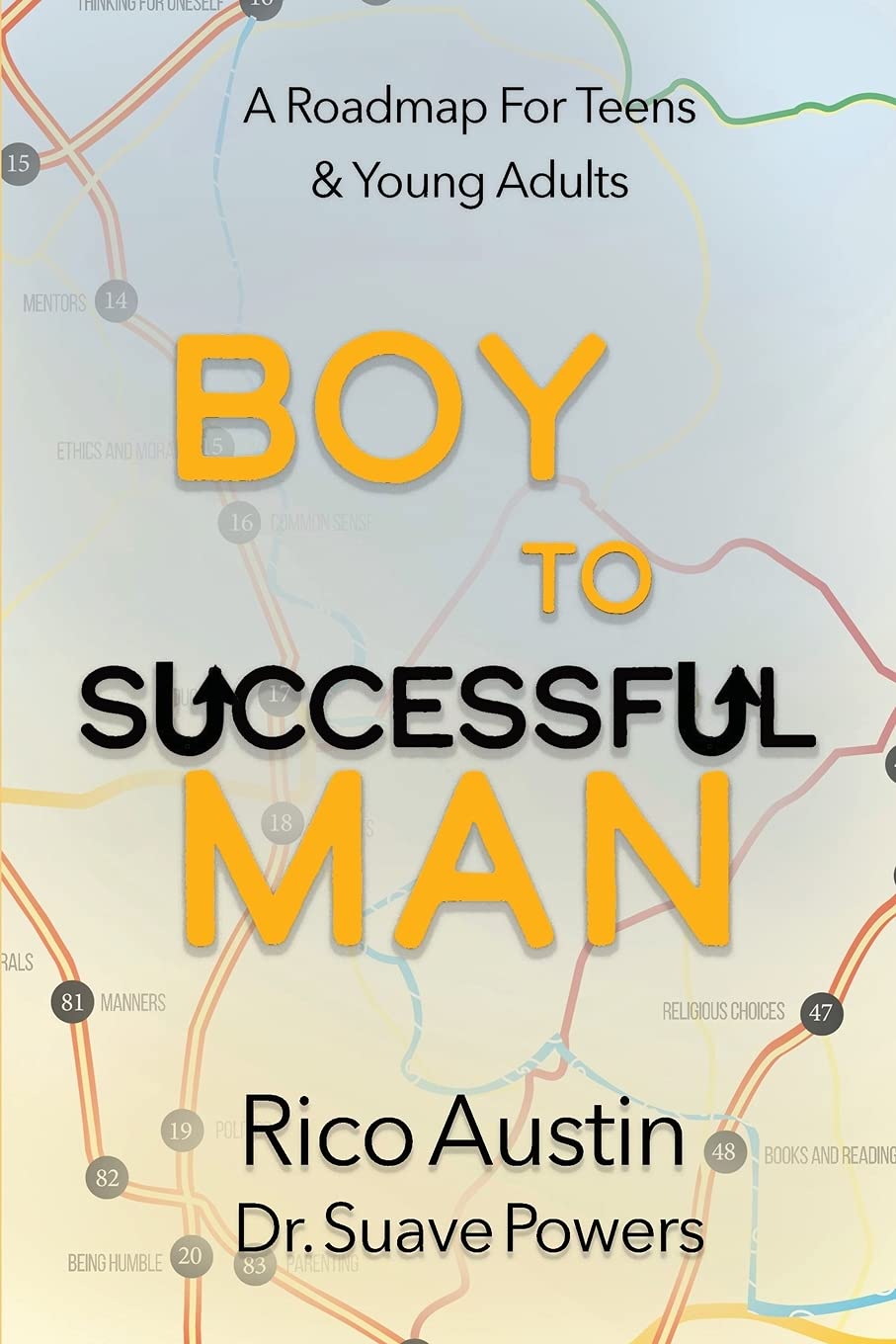
New Release from Rico Austin - BOY TO SUCCESSFUL MAN


Find BOY TO SUCCESSFUL MAN, the 10th book release for Rico Austin, on Amazon HERE 

If you have ever sat at the knees of a family member or neighbor who regaled you with their wild stories and hard-earned lessons, you have probably learned a thing or two about how others' stories can help prepare you for life. Through Boy to Successful Man, you will gain invaluable information from two authors who have seen it all.

For anyone who feels misunderstood, for anyone who feels angry, for anyone who feels lost-this book is for you. There is no shame in feeling trapped or confused by the expectations for you to grow from a boy into a man. This book is a tool to give young men great lives, no matter their circumstances.


About the author:


Rico Austin, PhD, was born and raised in Southwestern Idaho as the oldest of five boys. He grew up in an area ripe for adventures, and he learned a lot along the way. His bittersweet stories will have you howling with laughter, grieving from tragedy, and leaving you on the edge of your seat. Rico's love of reading, exploring, and traveling allured him to many parts of the globe, including Lithuania, Cuba, the United Kingdom where he played American Football, and Mexico to get his PhD. Rico has undergraduate degrees from Boise State University, Grand Canyon University, Staffordshire University, and an MBA from Thunderbird School of Global Management. He and his wife live in Scottsdale, Arizona. This is Rico's tenth published book.

Monday, May 17, 2021

Warrior Women Part 2 - The Dark Ages and the Middle Ages - by Vijaya Schartz

 Queen Boadicea or Boudicca of Roman Britain


Early on, Boudicca was publicly flogged by the Roman occupants for claiming her father’s crown and lands, and treated like a slave despite her rank. Then she was forced to watch the rape and torture of her two daughters, who were about 12 years old.

An ancient historian tells us that this Celtic queen of the Iceni “possessed greater intelligence than often belongs to women.” She is represented with waist-length, flaming red hair, wearing a gold torque and colorful clothing.

With a piercing gaze and a harsh voice, she rallied the Celtic tribes into an army of 100,000 and killed 80,000 Roman soldiers with superior armament. With her daughters, she led the charge on her light chariot, carrying flaming torches, like raging Furies.

Decimated at first, the Romans eventually received more reinforcements, the Celts lost and were exterminated. Boudicca, who survived the last battle, escaped, only to kill herself with poisonous hemlock. She refused to be paraded in Rome as a vanquished enemy.


Norse mythology - Valkyries and shieldmaidens

Norse legends speak of Valkyries, heavenly shieldmaidens, who flew over the battlefield and collected the souls of brave warriors slain in battle. So, for a long time, history assumed the stories of Viking Warrior Women to be legend as well.

A Viking grave from the tenth Century in Birka revealed weapons, gaming equipment, and two horses. Assumed to be that of a powerful Viking warrior, the skeleton suggested the person was female. Recently, a DNA analysis confirmed the powerful warrior was indeed a woman.

In truth, the Vikings counted many shieldmaidens in their ranks. Many were mentioned throughout history. Now, we know they were real.

One of the most famous Viking warrior women is Lagertha, wife of Ragnar, portrayed prominently in the History Channel series Vikings.


Japan’s Samurai women

Since the 12th century, many women of the Samurai class learned how to handle the sword and the naginata primarily to defend themselves and their homes. In the event that their castle was overrun by enemy warriors, the women were expected to fight to the end and die with honor, weapons in hand.

The Onna Bugeisha were female Samurai trained to protect entire villages and communities, not only the family property. If a Samurai had no son, he reserved the right to train his daughters as full-time onna bugeisha.


Rather than sitting at home waiting for the fight to come to them, some young women with exceptional fighting skills rode out to war with the men. They behaved like Samurai. They had the strength to fight with two swords. They could enlist in the army of a daimyo and fight side by side with male Samurai. They wore the attire and the hairstyles commonly worn by the men of the army.

An example of such an onna-bugeisha is Tomoe Gozen. Of course, like many warrior women of her time, official history labeled her more of a legend than a real person. But nowadays, we know better…


Joan of Arc - Medieval Warrior maiden – 1412-1431

As France was losing at home against the English during the 100-year war, this teenage peasant girl, a maiden, managed to convince the heir to the throne of France to give her control of his flailing armies. Among the chaos of war, she secured and attended his coronation.

As a keen strategist, Joan of Arc won many battles for the king of France. She didn’t hesitate to reprimand prestigious knights for swearing, behaving indecently, skipping Mass, or dismissing her battle plans. Personal attacks by the English, who called her rude names and joked that she should return home to her cows, upset her greatly.

Joan of Arc wore weapons and armor and brandished a standard as she led her men to battle. But it is said she never killed anyone. She was wounded at least twice, taking an arrow to the shoulder during her famed Orléans campaign and a crossbow bolt to the thigh during her failed attempt to liberate Paris.

Betrayed and delivered to the English, she was imprisoned. After she made a solemn promise never to wear men’s clothes again, they stole her woman’s clothes, forcing her to dress like a man. With the complicity of a French Bishop, they condemned her for that crime. They also condemned her for cutting her hair like a man, hearing voices, and being convinced she was following the will of God. She was burned at the stake in Rouen in 1431. She was 19 years old.

In my writings, I like to portray warrior women. Here is my medieval maiden in the Celtic legends Curse of the Lost Isle series. Damsel of the Hawk is a standalone in the series. Find it on Amazon HERE Find it at BWL Publishing HERE

1204 AD - Meliora, the legendary damsel of Hawk Castle, grants gold and wishes on Mount Ararat, but must forever remain chaste. When Spartak, a Kipchak warrior gravely wounded in Constantinople, requests sanctuary, she breaks the rule to save his life. The fierce, warrior prince stirs in her forbidden passions. Captivated, Spartak will not bow to superstition. Despite tribal opposition, he wants her as his queen. Should Meliora renounce true love, or embrace it and trigger the sinister curse... and the wrath of the Goddess? Meanwhile, a thwarted knight and his greedy band of Crusaders have vowed to steal her Pagan gold and burn her at the stake...

Happy Reading

Vijaya Schartz, author
Strong Heroines, Brave Heroes, cats
http://www.vijayaschartz.com
amazon B&N - Smashwords - Kobo FB 

Monday, April 26, 2021

Southern Arizona Book Heroes Golf Tournament by Rico Austin, PhD

Arizona Authors Association member Rico Austin PhD was one of the Arizona authors of children’s books who earned recognition for his educational children’s book, ARIZONA Is Where I Live. This book was showcased by the charitable “Book Heroes,” at the Inaugural Birdies 4 Books Golf Tournament in Tucson, AZ. The golf tourney took place on Sunday, March 21st at the semi-private Rolling Hills Golf Course and Country Club. Rico played in a foursome with three friends who live in Tucson and who also support the 401C Charity of Southern Arizona Book Heroes. 


In 2013, Rico wrote his first children’s book, ARIZONA Is Where I Live, and it is wonderfully, colorfully illustrated in pastel crayons by the talented Ms. Cindy Work. It is an educational and fun book for children ages four through twelve, teaching and giving descriptions of the various wildlife and plants that make Arizona unique and a great place to not only live, but also visit. 

A young woman named Jennifer Dillon founded a program in 2016 in Tucson, Arizona, under the name “Books to Rescue-Pima County.” In 2019, it officially became a non-profit and changed its name to “Southern Arizona Book Heroes.” This organization is very dear to Rico and other Arizona authors because it helps take young children’s minds off of tragedies with books and their illustrations. From violent acts to car crashes to a growing opioid epidemic, “Southern Arizona Book Heroes” (SABH) has joined the front lines with first responders giving comfort to the youngest and most vulnerable citizens. SABH provides resources that help treat children’s unseen injuries—their emotional wounds. Jennifer and her volunteers equip first responders, victim advocates, social workers, and child-centric agencies with new books and new plush toys to distract, comfort, and soothe traumatized children.


Reading a book is just the first step in building a strong relationship with children in our community. We support our first responders and believe this program helps to build partnerships with our most important community members—our kids. Upon inception of this program in 2016, a good friend of Rico’s, Mr. Manuel “Abby” Cady, purchased thirty of Rico’s children’s books to donate, inspiring both Rico and his wife Connie to donate another thirty books. Since that time, both Abby and his wife Kim Cady have donated another fifty of Rico’s children’s books, as have Connie and Rico. 

Jennifer Dillon - Southern Arizona Book Heroes founder

In April 2019, Jennifer was on the local Tucson television show, “Tucson Morning Blend,” where she and Southern Arizona Book Heroes showcased ARIZONA Is Where I Live. You may watch that clip HERE

Rico is so very proud to be a part of this program. If there are any other children’s book authors who belong to the Arizona Authors Association who would be interested in donating their books, here is the web address: www.soazbookheroes.org 


Rico Austin, PhD is the author of many award-winning essays and books including My Bad Tequila. His first children’s book, ARIZONA Is Where I Live , was featured in this newsletter and on television. Find out more about Rico and his books HERE. 


Thursday, April 15, 2021

Warrior Women - Part 1 - the Ancient World - by Vijaya Schartz


Ahhotep : Military Leader and Egyptian Pharaoh


Ahhotep’s burial equipment included a dagger and an inscribed ceremonial axe blade made of copper, gold, electrum and wood. The decorations were characteristically Minoan. Also found were three golden flies, badges of bravery awarded to people who served in the army.

Fu Hao: China’s First Female General:


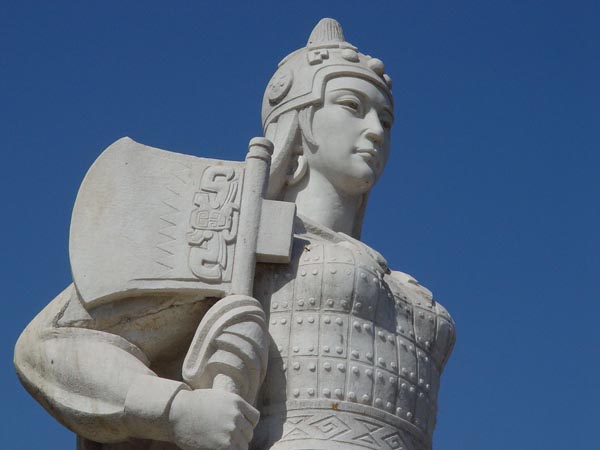
One of the earliest records of female warriors in China comes from oracle bones found in a tomb. The bones told the forgotten story of a ruthless military general of the Shang Dynasty in 1200 BC. The warrior was Fu Hao, queen consort of King Wu Ding, high priestess, and military leader. She defended the Shang dynasty in several battles. 

At the time of her death, she was the first female Chinese soldier to be buried with the highest military honors.


Artemisia I Of Caria: Commander of Ancient Halicarnassus


According to Herodotus, Artemisia of Halicarnassus was a Greek queen in the 5th century BC, long before Alexander the Great. Artemisia wielded power during a time when Greek women couldn’t vote in Athens, the home of original democracy. She is described as a femme fatale, pirate queen, and played a role in the events of the 300 Spartans described in the movies. During the Greco-Persian wars, she fought for the Persians at Salamis and contributed her warships to the Persian Navy.


Zenobia, warrior queen of the Roman colony of Palmyra, in present-day Syria, from 267 or 268 to 272.


She was described as a conqueror. In 269-270, Zenobia and her general, Zabdeas, conquered Egypt, ruled by the Romans. When the Roman prefect of Egypt objected to Zenobia's takeover, Zenobia had him beheaded. Then she sent a declaration to the citizens of Alexandria, calling it "my ancestral city," claiming her Egyptian ancestry. Zenobia personally led her army as a "warrior queen." She conquered more territory, including Syria, Lebanon, and Palestine, creating an empire independent of Rome. After winning and ruling these Roman provinces, she was subjugated by Emperor Aurelian. She died in captivity sometime after 274.

The Amazons:


The Amazons were not the stuff of legends.


Long believed to be purely imaginary, the Amazons were the warrior women described as the archenemies of the ancient Greeks. Recently, the remains of 300 warrior women were found in more than 1,000 excavations of Scythian kurgans (burial mounds), from Ukraine to Central Asia. This spectacular discovery gives credit to the myth of the amazon warriors.


They were reported in the Greek writings of Herodotus as women the Greeks encountered on their expeditions around the Black Sea. They rode horses, hunted, fought, used bows and arrows, just like men. They were fierce, nomadic, and refused to remain sedentary. They lived without men, whom they only frequented for procreation. They kept the baby girls but when the boys reached the age of five, they returned them to their fathers.


Other writings relate similar stories of Amazons by travelers from ancient Persia, Egypt, and as far as China.

Warrior women of Ancient Japan:


For thousands of years, certain upper-class Japanese women have learned martial skills and participated in battles right alongside the male warriors. They were skilled with sword, spear, and bow.


These include the legendary Empress Jingu, (169-269 A.D.) She ruled as a regent following her husband’s death in 200 AD. After seeking revenge on the people who murdered her husband, she invaded the Korean peninsula, the ancestral land of her mother, who was a descendant of a legendary Korean prince.


Empress Jingū became the first woman to be featured on a Japanese banknote however, since no actual images of this legendary figure are known to exist, the representation of Jingū was artistically contrived from the photograph of a 19th Century Japanese woman.

I write about all kinds of warrior women in my novels. But if you like ancient warrior women, you may want to check out these, available in eBook and paperback on my links below.


Vijaya Schartz, author
Strong Heroines, Brave Heroes, cats
http://www.vijayaschartz.com
amazon B&N - Smashwords - Kobo FB

Wednesday, April 7, 2021

WHAT POUNDS MY CAKE by Jane Ruby

Know what pounds my cake? Not adapting to a pandemic. But I’m not going to cite all the national/local cases—we’ve all heard them a million times before. Instead, I’m going to cite how I almost blew a golden chance by passing up a virtual Read Across America at Mountain View Elementary School.

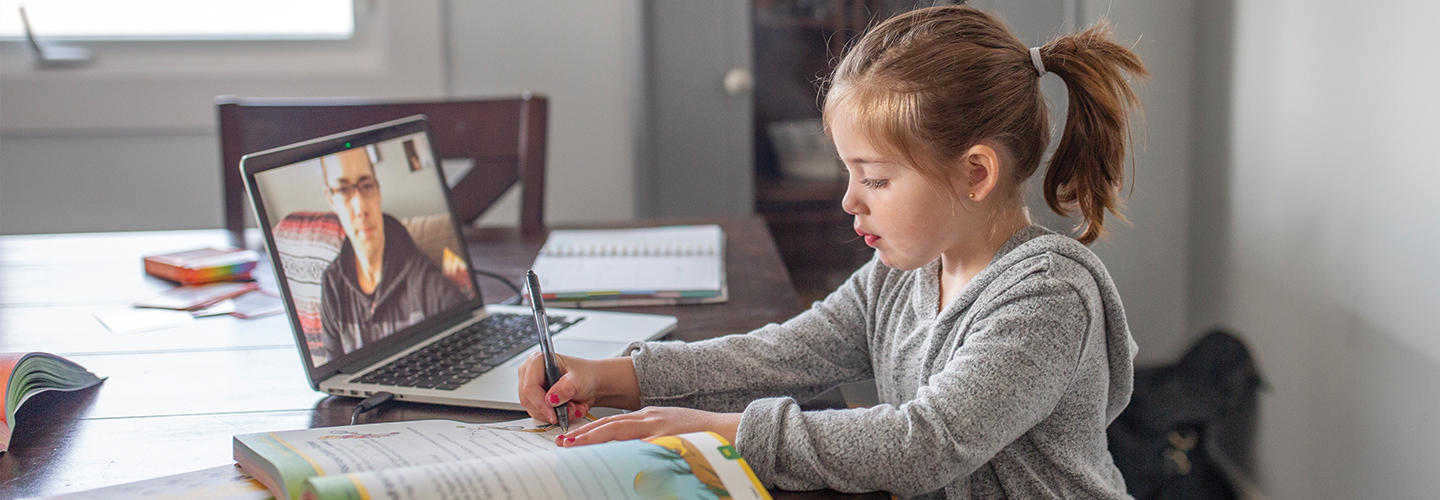
Recall that many Arizona schools have gone to virtual or hybrid learning. That means full- or part-time online instruction. My daughter Zooms most of her college classes at Northern Arizona University. As a musical education major, she’s also had to Zoom her student teaching. So, she’s on both ends of online education.


But adapting to this type of education was not problematic for her. She, like most members of “Gen Z” were born in this evolving technology. As a four-year old, she helped me hook up a VCR, DVD, and PlayStation to the family entertainment system. As a nine-year old, she guided me through building my author website. And I’m sure if asked right now, she could reconfigure a more efficient APS power grid—overnight. There just ain’t nothing these Gen Zers can’t do! 

Not the case for me. As a Baby Boomer born in the era of vacuum tube technology, I marveled at the development of solid state circuitry and went dizzy with the dawn of nano-chip technology. But my adaptations were clunky. My once steep learning curve flattened. It may have something to do with aging brain cells. Or maybe I’m too complacent with the present technology and don’t want to fix what ain’t broke. 

As an in-person elementary school presenter, I was happy with my modus operandi for six years. But this year when asked to present on-line, I balked at the offer. 

First of all, I can count on three fingers how many Zoom meetings I’ve attended (the first being a baby shower). Secondly, I’ve never presented in Zoom. Thirdly, I’ve never presented on Google Meet—the local school’s online meeting platform. With three strikes against me I wanted to turn the offer down. 

Before the pandemic, I was comfy-cushy as an in-person presenter for the past six years; proud of only needing a few years to comfortably work a smart board with Power Point. Now in the heat of virtual learning I’m once again in unfamiliar territory. I got on YouTube and spent a few hours viewing tutorials, but because of the upcoming class presentation I felt pressured and didn’t understand a thing. I spilled my inadequacies to the school’s event coordinator, feeling naked in the rain! 

She assured me that I was not alone; that many presenters were like me (OK, maybe not so naked), and that she’d schedule a few practice sessions. I felt a little better and joined one. I did so poorly I had to schedule another one. Then another one. So shameful! 

With one day to go, I scheduled a practice meeting with my daughter, the Gen Z Queen. She’d never participated in Google Meet before but figured it had to be similar to Zoom. Well, she got it, and I still didn’t. She recommended that I get help from the teacher since I didn’t have enough time to jack up my confidence. 

I emailed the seventh grade teacher my slides in case my internet dropped or I succumbed to hypothermia from being naked in the rain for two days. That made me feel a little better, knowing at least I had a Plan B. She emailed back, saying she’d be happy to facilitate the meeting in case I got washed away in shame. 

The night before my presentation, I lay restless in bed. Once asleep, I had nightmares of all the YouTube tutors laughing, jeering, and scolding me for being a Google Meet moron. How could they be so cruel?! I closed one tutorial window, and it popped up in another window continuing to mock me! 

That morning, at 5:30 AM, I got up, took a shower, and washed my hair. If I’m going to be a moron, I may as well look like a well-groomed one. After getting a vente-sized Starbucks latte, I prepped my backlight, headphones and computer in my dining room—my back wall full of family photos and shelf of classic novels. 

I entered the Google Meet meeting about 15 minutes early, about 7:30 AM. Thankfully the teacher was already there. She had viewed my slides ahead of time and really liked my presentation. That eased my mind a little. She also mentioned that her first class contained some gifted students who could assist both me and her should we encounter any technical glitches. After hearing that and sipping some latte, I really felt better.


Show time! At 7:45AM, the teacher thanked all the students for joining and offered incentives for participation. She introduced me, and I gave a brief bio. My presentation was an original, ~3000-word short story that I read entirely. I also included pictures on every slide. After every third slide, I inserted thought-provoking questions for the students to answer.

Sometime during my first few slides I got a chat message from one of the students: “Your voice is reverberating; push in your headphones jack more firmly.” I must have bumped it when reaching for my latte cup. “Thanks,” I chatted back and pushed in the jack. At least three more students acknowledged my sound correction. I am liking these seventh grade students; they’re so much nicer than those YouTube tutors in my dream! 

Many students engaged in the question/answer period—sometimes presenting arguments with supportive reasons. They must have been following my story closely! After the presentation, a lot of them chatted their gratitude for hearing my story. The teacher also seemed excited about her students’ participation. After dismissing the students, she wanted to know if I could present more short stories if I had them—and I did! 

After that first experience with Google Meet, I didn’t feel so naked in the rain. Take that, YouTube tutors! 


Jane Ruby is an award-winning novelist, essayist, and short story writer. She’s judged many association literary contests and is now in her third year as the Literary Contest Coordinator as well as Secretary of the Association. Learn more about Jane HERE

Monday, March 29, 2021

Accuracy in Historical Fiction: Does It Matter? by Ashley E. Sweeney

 In children’s literature, if a frog and a monkey wear striped pajamas and go on vacation to the moon, we think nothing of it. But give Wyatt Earp a cellphone or Calamity Jane a sports car and poof! Our credibility as an author is shot. 

Back when I was a reporter at a rural weekly newspaper in Washington State in the 1980s and 1990s, the Five W’s ruled first paragraphs. The thinking behind this formulaic style of journalistic writing is that if stories must be shortened due to space limitations, all the facts still appear in the story: Who/What/When/Where/Why. 

And our editor drilled into our heads: Check your facts. Get them right. Period. 

 You might ask: What’s the big deal? No ones cares. Or: Why attempt to “get it right”? I don’t have the time for that. 

I subscribe to the camp that authors have both a burden and a responsibility for being as historically accurate as possible, unless it gets in the way of the story (and, in that case, mention any discrepancies in the afterword). As authors, we want readers to trust us (and come back for more), which is why we can’t risk making reckless mistakes. 

 It’s important here to delineate the difference between material facts and immaterial facts. With material facts, i.e. what date was Abraham Lincoln sworn into office, there is no margin of error. What he ate for breakfast, what color socks he wore, or what time he retired that night are immaterial facts, and we, as authors, can color our manuscripts with our imaginations when writing in this type of detail. 


 How to do this? For each of my manuscripts, I begin collecting resources as soon as an idea surfaces. In the early stages of any manuscript, I amass 50-100 books on various subjects pertinent to the era and turn to librarians, historians, museum curators, authors, storytellers—and the Internet—to fill in holes. 

 Here are some other tips for sourcing data: *Visit locale/setting of novel, if possible, to flesh out all sensory elements *Read/research anything and everything about the era you are writing about: Literature Newspapers and Magazines Advertisements Maps Art Encyclopedias Photos/Film Diaries/Journals Music Census Data School, Church, and Land Records Calendars/Phases of the Moon/Tide Charts Almanacs and Catalogues Birth, Marriage, and Death Announcements Recipes *Visit museums/historical societies (actual or virtual) *Use print, digital, audio, and crowd-sourced material

In writing Answer Creek and Eliza Waite (and in my current work in progress), I fact-check myself constantly. Did matchsticks exist in the late 19th century? Who was president of the U.S. in the 1840s and 1890s? What were accepted practices for births and deaths in remote settlements? Where did pioneers access herbal remedies commonly used for constipation and ulcer? When did women get the vote in each of the states? Why were oxen and mules preferable to horses? How did men and women cook and bathe without any modern conveniences, especially on overland trails or in rural areas? 


When writing, I place a triple XXX as a placeholder to remind me to return to fact check that piece of information as I don’t want to disrupt the flow of writing to check every detail when creative juices flow. It’s easy to find this marker (or TK, i.e. “to come”) in document searches. On days when I don’t feel particularly inclined to churn out a thousand words or two, I use that time for historical research. It’s one of my favorite parts of the writing process, but it can become very time consuming. 

Some authors fear they’ll get it all wrong and that fear stops them cold—this line of thinking is writer’s prison. If you’re scared before you put anything down on paper or computer, you’re compromised every time you sit at your desk. Days and weeks turn into months of procrastination. Your story dies on the vine because you’re worried that some aficionado/reviewer is going to tank your manuscript once it’s published. You’re not any closer to getting published if fear is crippling you. 

Instead, try turning that fear around and calling it confidence—confidence in your skills as a researcher and a writer, confidence that you’re aligning yourself with history and paying attention to detail, confidence that you will endeavor to get everything right (not just facts, but characters and settings and plot), but not at the expense of never getting anything down on paper or computer at all. Through this lens of confidence, you’ll turn prison into permission. You’ve got lots of time to check and re-check facts. 

 That’s why in my new manuscript, set in 1905 rural Arizona Territory, you won’t find my protagonist driving a Jeep, reading a book or magazine that wasn’t published yet, or saying something that wasn’t in vogue at the time. Every day, I find myself going down proverbial rabbit holes doing historical research—but that’s a topic for another newsletter! 

Remember what Thomas Edison said: “Genius is 1% inspiration and 99% perspiration.” 

 So get to work! In the meantime, I’m back at it, too. Perched on my shoulder, my old editor keeps whispering in my ear. Check your facts. Get them right. Period. 

Find Ashley and her books HERE


Ashley E. Sweeney is the winner of the 2017 Nancy Pearl Book Award for her debut novel, Eliza Waite. A native New Yorker, she is a graduate of Wheaton College in Norton, Massachusetts, and resides in Tucson. Answer Creek, released in May 2020, is her second novel, and winner of the 2020 Arizona Authors Association Literary Award. She is at work on a third novel set in 1905 rural Arizona. Find Ashley’s books by clicking these links: Answer Creek and Eliza Waite Visit Ashley’s website HERE. Winner: 2020 Arizona Authors Association Literary Award Winner: 2017 Nancy Pearl Book Award Finalist: 2016 Sarton Women’s Book Award Finalist: 2017 WILLA Literary Award